2026-03-16 13:30:00
The USDCAD is moving lower on the day as markets react to an improvement in global risk sentiment tied to easing Middle East tensions. The shift in tone has pushed stocks higher, yields higher, oil prices lower, and the USD broadly weaker, helping to weigh on the USDCAD.
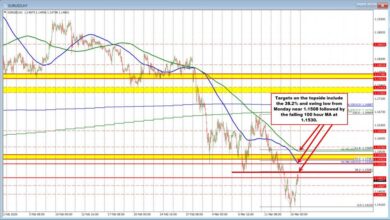
From a technical perspective, the pair has rotated lower after once again failing near the key swing resistance area between 1.37149 and 1.3724. That zone has acted as an important ceiling dating back to mid-January. On Friday, the price briefly pushed above that area — similar to the move seen earlier this month on March 3 — but buyers were unable to sustain momentum, and sellers once again leaned against that resistance level.
The initial downside move stalled temporarily following the better-than-expected Canada CPI report, which helped lift the pair from the intraday low at 1.3675 to around 1.3695. However, that rebound proved short-lived, and the pair has since rotated back lower.
Technically, the price is now trading around the 38.2% retracement of the move from Thursday’s swing low at 1.35762 to Friday’s high at 1.37408, which comes in at 1.36778. The market is currently oscillating around that level, making it a key near-term pivot. If sellers can hold the pair below 1.36778, the next downside target comes near the 1.3624–1.36305 area, which marked the lower boundary of a consolidation zone seen from mid-February through March 6.
Canada CPI cools further
Canada’s February CPI rose 1.8% year-over-year, below the 1.9% expected and down from 2.3% in January, marking the lowest inflation reading since September. On a monthly basis, CPI increased 0.5%, slightly below the 0.7% forecast.
Core inflation measures also softened. CPI median and CPI trim both came in at 2.3%, below expectations, while the CPI common measure fell to 2.4% from 2.7% previously. Much of the moderation reflects lower energy costs, with gasoline prices down 14.2% year-over-year, while shelter inflation slowed to 1.5% as rent and mortgage cost pressures eased.
Some of the decline also reflects base-year distortions tied to Canada’s temporary GST/HST tax holiday, which had previously boosted year-over-year comparisons. Overall, the report points to broad disinflation and continued progress toward the Bank of Canada’s 2% inflation target, although the recent rise in energy prices in early March could complicate the outlook going forward.
Key technical levels
-
Resistance: 1.37149–1.3724 swing area
-
Near-term pivot: 1.36778 (38.2% retracement)
-
Next downside target: 1.3624–1.36305 consolidation support zone