2026-03-16 04:52:00
But no one will answer.
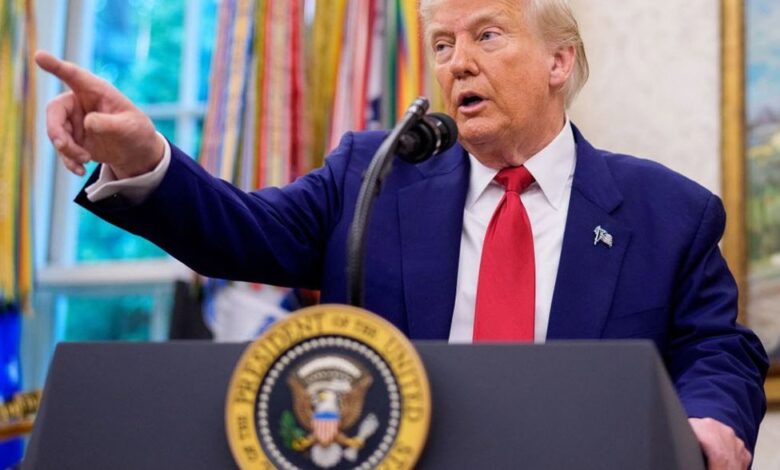
In a desperate attempt to try and “fix” this whole mess of a situation, US president Trump has called for allies to step in and help with the Strait of Hormuz de facto closure. His suggestion is for the countries affected to send their own warships to help escort ships through the strait.
In particular, he calls on Japan, China, South Korea, and the UK to do so since they are the ones who are the most impacted by the Strait of Hormuz blockade. However, here are two key reasons why that just won’t do. And even so, the practicality of the whole situation also might not make much sense.
The first being that no other country wants to get involved in a war that they have no business with. It’s wild to think that Trump would believe other countries will want to be part of all of this when the US and Iran are still exchanging missile strikes day after day. To so blindly enter an active war zone is madness. Besides seeing energy disruptions, no other US ally nation has much else to gain by interfering with the affairs here in this present state.
The second is that even if these countries are willing to get involved, no commercial vessel will still take on the risk to pass through the Strait of Hormuz. Insurance firms have already stripped war risk coverage on the strait, so any ships passing through will have to bear all the risk in doing so. Even with US warships acting as escorts, who is going to bear the consequences when a five-figure cost Iranian drone or naval mine sinks a vessel worth millions of dollars? The risk-reward just doesn’t add up here.
Moving on to the practicality of it all, it also brings about another set of issues even if let’s say the countries above agree to help. It’s a long shot but let’s assume in some other dimension that this does happen. Having escorts doesn’t mean that the Strait of Hormuz becomes fully operational again.
The most likely scenario for escorting ships would be to gather a bunch of them as a convoy and then move along slowly through the strait. It means that the opening up of the blockade in this instance would be more of a trickle rather than a flow/rush.
The speed of the movement of the convoy would be extremely slow, not least already having to cater to the slowest of the vessels among the bunch. However, there’s also the fact that these ships will still have to navigate through the thousands of naval mines laid out by Iran while at the same time needing to fight off drones and shore-based missiles. It’s a full war-torn republic.
And you also have to add to the fact that Iran likely has jammers in the region to disrupt GPS and AIS tracking. And that means most ships will still be flying blind, making it even more perilous to navigate through the strait.
All in all, it just seems that Trump is desperate for any solution in opening up the Strait of Hormuz currently. It arguably points to the fact that his pain threshold is continuing to be tested in all of this. As for other countries stepping in, the risk-reward is just not sensible at this stage no matter how you look at it. All it takes is just one lucky shot by an Iranian drone or missile and everything will blow up once again. No pun intended.