Prop firms have become the bridge between talented traders and the funding they need to scale their strategies without risking personal savings. But the prop firm space is crowded and competitive. Choosing the right firm can make or break your trading career.
Prop firms offer traders access to capital they could not access otherwise, often ranging from ten thousand to several hundred thousand dollars. You do not risk your own money. You prove your skills through an evaluation, and if you pass, you trade with the firm’s capital while keeping a significant share of the profits.
This model has democratized trading in ways that seemed impossible a decade ago. Anyone with a computer, internet connection, and genuine skill can now compete for funded accounts regardless of their personal financial situation.
What Is a Prop Firm
A proprietary trading firm gives you access to trading capital without requiring you to risk your own money. In exchange, the firm takes a cut of whatever profits you generate. It is a simple deal. You bring the skill, they bring the funds, and both sides win when trades go right.
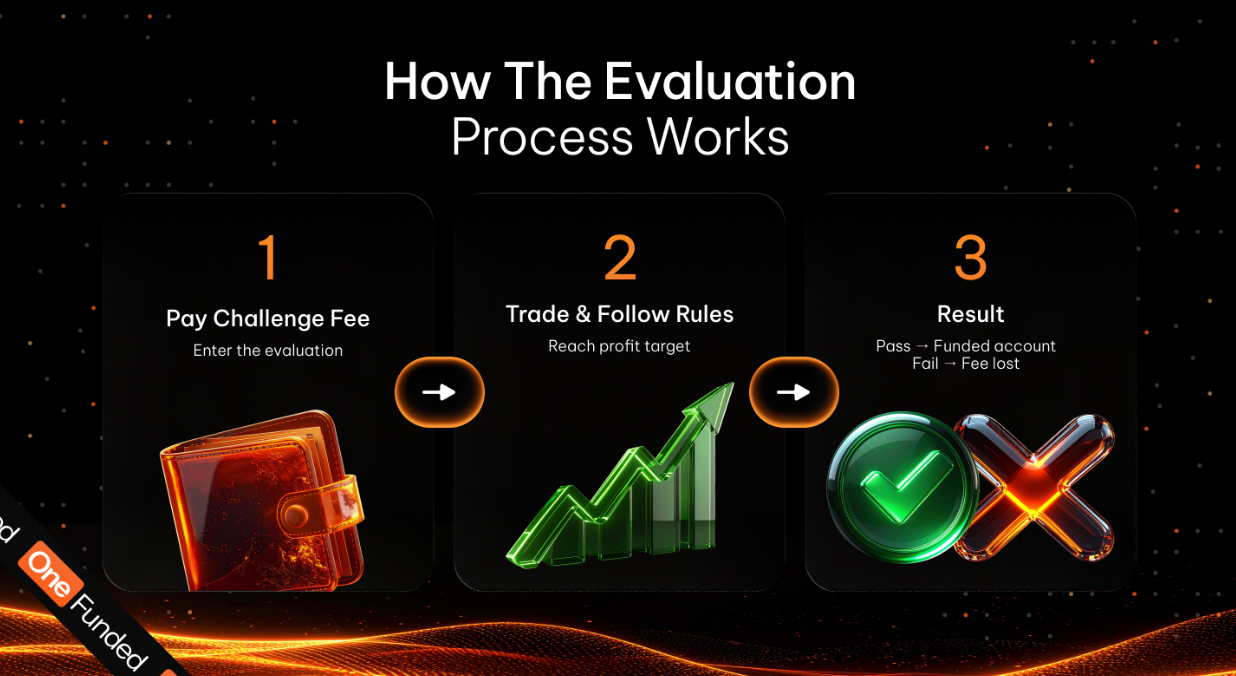
How the Evaluation Process Works
Here is how it typically works. You pay a challenge fee to enter an evaluation. During this evaluation, you need to hit a specific profit target while staying within the firm’s risk limits. Pass the test, and you get access to a funded account. Fail, and you are out of the challenge fee.
Most prop firms today use simulation-based models. You are trading on demo accounts that mirror live market conditions rather than executing with real capital. This matters for regulatory reasons, but from a practical standpoint, nothing changes. You still need to trade well, manage risk properly, and follow the rules to get paid.
The simulation model benefits both parties. Firms reduce their exposure to rogue traders or unexpected market events. Traders get the opportunity to prove themselves without the pressure of knowing real capital sits on the line during evaluation. Once funded, performance expectations remain identical regardless of whether execution occurs on live or simulated infrastructure.
Why Many Traders Fail Because of Bad Firm Choice
Many traders who fail at prop firm challenges do not fail because they lack skill. They fail because they chose the wrong firm in the first place.
A trader might have a profitable strategy that works beautifully in certain market conditions. But if they sign up with a firm that has restrictive rules around news trading, unrealistic daily drawdown limits, or hidden clauses buried in the fine print, their strategy becomes worthless. They are playing a game rigged against them from the start.
The difference between passing a challenge and blowing an account often comes down to finding a firm whose rules align with your trading style. It is not about finding the cheapest challenge or the highest profit split on paper. It is about understanding what you are actually signing up for before you pay a single dollar. This guide will walk you through exactly how to evaluate prop firms like a professional. If you are new to prop trading, this blog for funded traders covers in-depth guides, market insights, and firm comparisons to help traders make informed decisions.
Why Firm Choice Matters
Choosing the wrong prop firm can derail your trading career before it gains momentum. The firm you select influences every aspect of your experience, from the rules governing your trades to whether your earnings actually reach your bank account.
The Psychological Weight of a Poor Match
Every prop firm challenge carries inherent pressure. You have committed money to participate, and specific targets must be met within defined constraints. When those constraints work against your natural trading approach, stress compounds rapidly.
Traders who perform well under one firm’s structure often struggle under another’s. The skills remain intact. The environment shifted, and the edge that worked before no longer applies in the new context.
Mental capital depletes faster than most traders anticipate. Fighting against incompatible rules drains focus and emotional energy that should flow toward market analysis and execution. The psychological cost of a poor firm match often exceeds the financial cost of the challenge fee itself.
Financial Exposure Extends Beyond Entry Fees
Certain firms have established patterns of denying payouts on technicalities. Others modify rules without notice or implement standards so restrictive that failure becomes nearly inevitable. Traders caught in these situations lose more than challenge fees. They lose invested time, depleted mental capital, and often the conviction required to attempt again.
Strategy Compatibility Determines Viability
Each firm’s rule structure dictates which strategies remain executable. Scalpers require tight spreads and rapid execution. Swing traders need permission to hold positions overnight and through weekends. News traders depend on market access during high-volatility economic releases.
Select a firm that prohibits these activities, and you have neutralized your approach before entering a single position.
Profit Splits Require Context
A ninety percent profit split appears attractive until wider spreads consume your gains at the execution level. Another firm offering eighty percent with tighter spreads and superior execution may deliver higher net returns despite the lower advertised percentage.
Your firm selection determines whether prop trading becomes sustainable income or an expensive education in due diligence.
How to Choose a Prop Firm
Selecting the right prop firm requires a structured approach. The following sections break down the critical factors that separate quality firms from those worth avoiding.
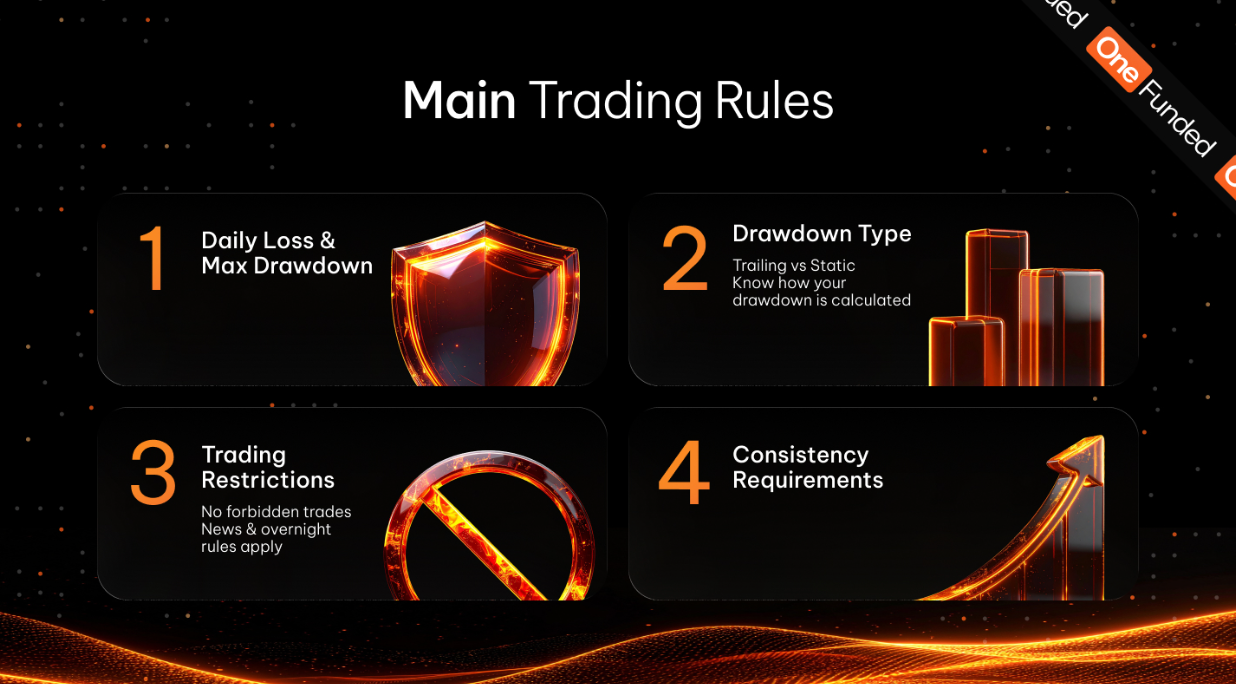
Trading Rules
Every prop firm operates with a specific rulebook. Understanding these rules before purchasing a challenge is essential because violations typically result in immediate account termination, regardless of how profitable you have been.
Daily Loss Limits and Maximum Drawdown
The most important rules to evaluate include daily loss limits and maximum drawdown thresholds. Daily loss limits cap how much you can lose in a single session, usually expressed as a percentage of account balance. Maximum drawdown sets the total loss threshold that ends your challenge or funded account.
For example, at OneFunded – the fastest-growing prop firm, for a One-Step challenge maximum daily loss 4%, and the maximum overall loss 6%. These clear limits help traders stay disciplined while progressing toward a funded account.
Some firms use trailing drawdown that follows your account’s high-water mark. Others use static drawdown measured from your starting balance. The difference matters more than most traders realize. Trailing drawdown punishes you for building early profits and then experiencing normal pullbacks. Static drawdown gives more breathing room for strategies that require holding through temporary losses.
Understanding drawdown calculation methods prevents nasty surprises. A trader up five percent who then experiences a three percent pullback remains profitable overall. Under static drawdown, no issue exists. Under trailing drawdown, that same pullback might trigger account termination if it breaches the adjusted threshold. Know exactly which method applies before you trade.
Restrictions on Trading Behavior
Many firms prohibit news trading entirely or impose restrictions around major economic announcements. Others ban holding positions overnight or over weekends. Some require minimum holding times per trade, which destroys any scalping strategy.
The best firms publish complete rule sets transparently before you pay anything. They use clear language that leaves no room for interpretation. When rules appear vague or buried in lengthy terms of service, treat it as a warning sign. Legitimate firms want you to understand the rules because they profit when traders succeed, not when traders fail on technicalities.
Consistency Requirements
Some firms require that no single trading day accounts for more than a certain percentage of your total profits. This prevents passing challenges through one or two lucky trades. While this encourages steady performance, overly strict consistency rules can penalize legitimate strategies that naturally produce variable results.
OneFunded publishes clear rule documentation covering daily loss limits, maximum drawdown thresholds, and permitted trading activities. Their structure allows news trading and overnight positions, accommodating different trading styles rather than forcing everyone into the same restrictive framework.
Challenge Structure
The evaluation process varies significantly between firms. Understanding how challenges work helps you choose a model that fits your trading approach and timeline.
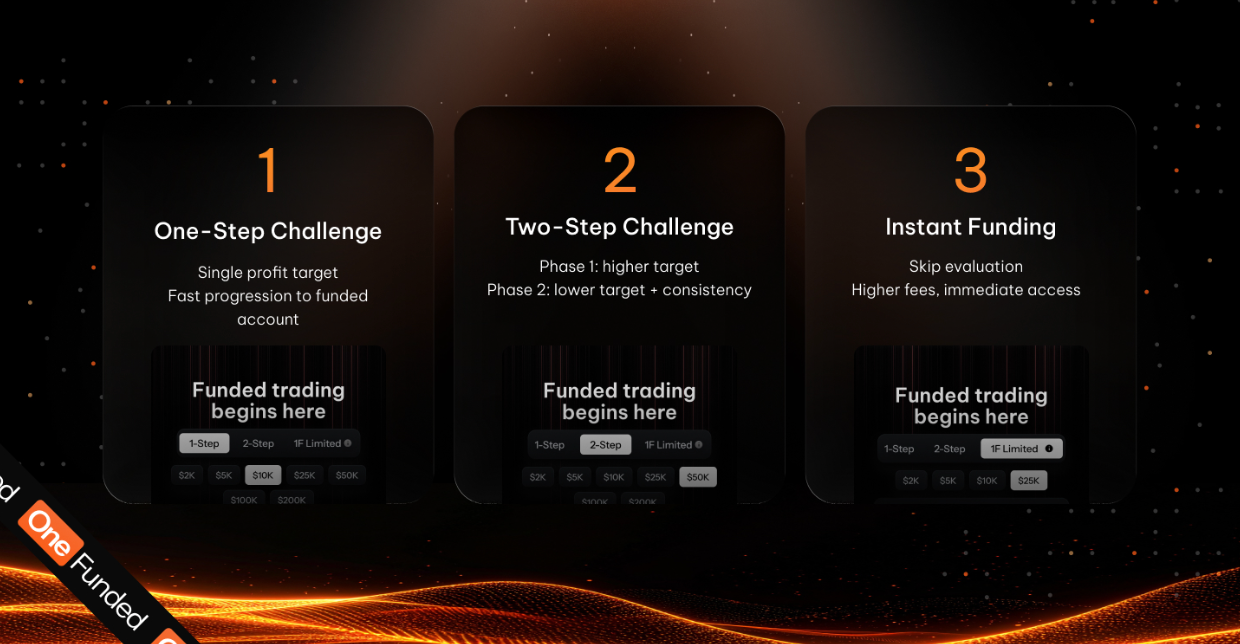
One-Step vs Two-Step Challenges
One-step challenges require hitting a single profit target while respecting risk parameters. These evaluations typically have higher profit targets but offer faster progression to funded status. At OneFunded, a one-step challenge is designed for traders who want to avoid long evaluation cycles. Once the profit target is reached and drawdown rules are respected, the trader moves directly to a funded account, making this option popular among experienced traders who value speed and simplicity.
Two-step challenges split the evaluation into phases with different requirements. At OneFunded, the two-step challenge focuses on long-term discipline. The first phase usually demands a higher percentage gain. The second phase lowers the profit target but often adds stricter consistency requirements. This structure tests whether you can perform across different conditions and timeframes.
Instant Funding Options
Some firms offer instant funding that bypasses traditional evaluations entirely. These programs charge higher fees and typically implement stricter ongoing rules, but they provide immediate access to trading capital. Experienced traders with proven track records sometimes prefer this path to avoid demonstrating skills through artificial challenge conditions.
Time Limits and Trading Pressure
Time limits represent a crucial variable that many traders overlook. Firms imposing deadlines for reaching profit targets create pressure that affects decision-making. Unlimited time challenges remove this stress entirely. You can wait for optimal setups, sit out choppy conditions, and avoid the revenge trading that often follows losses.
At OneFunded, there are no time limits on challenges. Traders are not forced to rush trades or meet arbitrary deadlines. Unlimited time removes stress entirely and allows traders to wait for optimal setups, sit out choppy or low-probability market conditions, and avoid revenge trading after losses.
When traders know they have unlimited days to reach targets, quality improves over quantity. Patience becomes possible instead of forced.
Profit Targets and Drawdown Ratios
Evaluate profit targets in relation to drawdown limits. A ten percent profit target with five percent maximum drawdown requires a completely different approach than eight percent profit target with ten percent drawdown. Calculate the risk-reward ratio of the challenge itself before committing any money.
Some firms also offer scaling plans that increase account size after consistent performance. Understanding these growth paths helps evaluate long-term earning potential beyond the initial funded account.
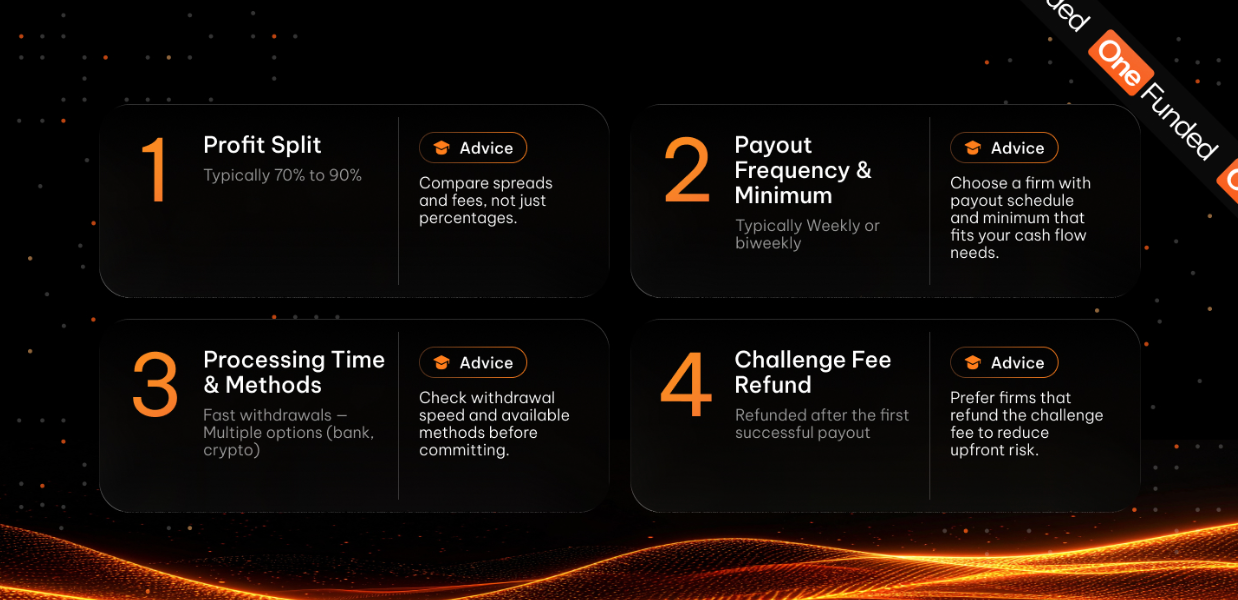
Payouts
The payout structure determines how much money actually reaches your account. Evaluating this goes beyond comparing profit split percentages.
Profit Splits in Context
Profit splits in the industry typically range from seventy to ninety percent, with some firms advertising up to one hundred percent under certain conditions. Higher percentages sound better on paper, but actual value depends on execution quality, spreads, and any fees deducted before the split calculation.
A firm offering ninety percent with wide spreads may leave you with less than one offering eighty percent with tight execution. Always consider the full picture.
At OneFunded, traders can earn up to 90% profit split, aligning with the top end of industry standards while maintaining fair execution and transparent conditions.
Payout Frequency and Minimums
Payout frequency affects cash flow and compounding ability. Some firms process withdrawals weekly. Others operate on biweekly or monthly cycles. Faster cycles let you access earnings sooner, reducing counterparty risk and freeing capital for personal use or reinvestment.
At OneFunded, traders have access to biweekly and weekly payouts through optional add-ons, allowing each trader to choose a withdrawal rhythm that fits their strategy and cash-flow needs.
Minimum withdrawal thresholds vary as well. A firm requiring one thousand dollars minimum creates friction for traders building smaller accounts. Lower minimums around one hundred dollars provide flexibility for regular withdrawals regardless of account size.
Processing Time and Methods
Processing time after requesting a payout matters more than most traders realize. Some firms complete withdrawals within twenty-four to forty-eight hours. Others take a week or longer. Extended processing times can signal cash flow problems or excessive bureaucracy.
Withdrawal methods also impact convenience. Cryptocurrency withdrawals often process faster with lower fees than traditional bank transfers. Multiple options ensure you can choose whatever works best for your situation.
Challenge Fee Refunds
Some firms refund challenge fees with your first successful payout. This policy effectively eliminates upfront cost for traders who prove profitability. The challenge fee transforms from a sunk cost into a temporary deposit. Not every firm offers this, but it signals confidence in their traders’ ability to succeed under fair conditions. At OneFunded, the challenge fee is refunded at 100% with the first successful payout, turning the evaluation cost into a fully recoverable deposit once profitability is demonstrated.
Platforms
The trading platform serves as your primary tool for analysis and execution. Platform quality directly impacts your ability to implement strategies effectively.
Core Requirements
Professional traders need robust charting capabilities with customizable indicators, multiple timeframes, and clean visual presentation. Execution speed matters equally. Orders should fill at expected prices without excessive slippage. Reliable uptime prevents missed opportunities during critical market moves.
A platform that lags, freezes, or rejects orders at the wrong moment can turn a winning trade into a loss. Don’t underestimate how much this affects real-world results.
Common Platform Options
Popular platforms in the prop firm space include MetaTrader 4, MetaTrader 5, cTrader, and TradeLocker. Each carries distinct strengths and weaknesses.
MetaTrader platforms offer extensive indicator libraries and automated trading through Expert Advisors. They remain the most widely used option globally. cTrader provides advanced charting and generally faster execution speeds. TradeLocker delivers a modern interface with TradingView integration, appealing to traders who prefer streamlined design.
Platform Flexibility
Some firms restrict which platforms traders can use. Others offer multiple options. Flexibility here ensures you can work with familiar tools rather than adapting to unfamiliar environments under challenge pressure.
If you have spent years mastering MetaTrader and a firm only offers cTrader, that transition adds unnecessary friction during evaluation.
Mobile Access
Mobile access has become increasingly important as traders manage positions from various locations. Quality mobile applications should provide full functionality rather than limited monitoring. The ability to enter, modify, and exit positions from your phone can make the difference when markets move while you are away from your desk.
Evaluate platform offerings carefully before committing. The best rules and payout structure mean nothing if the execution environment undermines your trading.
Fees and Transparency
Understanding the complete cost structure prevents unpleasant surprises that erode profitability. What you see upfront is not always what you end up paying.
Challenge Fees
Challenge fees represent the most visible cost. These one-time payments typically range from under fifty dollars for small accounts to several hundred dollars for larger funding tiers. Comparing fees across firms requires normalizing for account size.
A two-hundred-dollar fee for fifty thousand in funding differs substantially from two hundred dollars for ten thousand. Look at what you’re actually getting for the money, not just the number itself.
At OneFunded, challenge fees are clearly presented in a transparent pricing table, making it easy to compare costs across different account sizes and choose a funding tier that matches your risk profile and capital goals. Check OneFunded prices:
| Account Sizes | 1-Step Challenge Fees | 2-Step Challenge Fees | Fee Refund |
| $2,000 | $29 | $23 | yes |
| $5,000 | $56 | $45 | yes |
| $10,000 | $107 | $89 | yes |
| $25,000 | $143 | $125 | yes |
| $50,000 | $215 | $195 | yes |
| $100,000 | $395 | $361 | yes |
| $200,000 | $699 | $650 | yes |
Hidden and Ongoing Costs
Some firms charge additional fees beyond the initial challenge. Monthly subscriptions, data fees, platform access charges, and withdrawal fees accumulate quickly. Ask specifically about every potential charge before committing any money.
Spread markups and commissions affect trading costs on an ongoing basis. A firm advertising zero commissions might compensate through wider spreads that cost more per trade than a firm with tight spreads and small commissions. Evaluate total trading costs rather than isolated components.
Refund Policies
Refund policies deserve attention before purchase. What happens if you decide not to continue after buying a challenge? Some firms offer refunds within specific windows. Others consider all sales final. Understanding these terms protects against impulsive purchases you later regret.
Transparency as a Trust Signal
Transparent firms publish complete fee schedules prominently on their websites. They answer questions about costs directly without evasion or referral to lengthy legal documents. When pricing information proves difficult to find or understand, the opacity likely extends to other operational areas.
OneFunded maintains straightforward pricing with challenge fees starting under fifty dollars for smaller accounts. Their fee structure avoids hidden charges, and the challenge fee refund policy upon first successful payout demonstrates alignment with trader success.
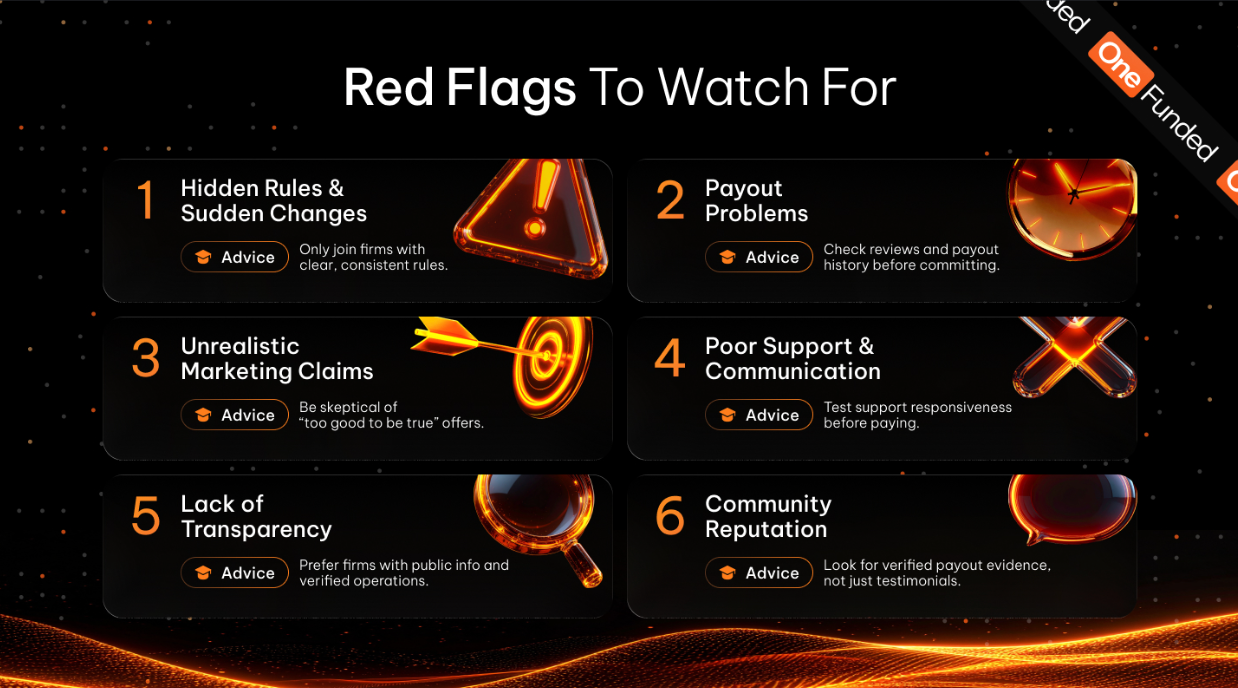
Red Flags to Watch For
The prop firm industry includes operators who prioritize extracting money from traders over supporting their success. Recognizing warning signs protects your capital and time.
Hidden Rules and Sudden Changes
Legitimate firms establish rules clearly and maintain them consistently. Problematic firms change rules mid-challenge or enforce standards never explicitly communicated.
Watch for terms of service that reference “sole discretion” language giving the firm unlimited authority to modify conditions. This legal phrasing often enables rule changes that disadvantage traders who signed up under different expectations.
Account closures citing “pattern detection” or “suspicious activity” without specific explanations suggest arbitrary enforcement. These vague justifications often serve to deny payouts rather than address genuine compliance concerns.
Payout Problems
Consistent payout issues represent the clearest indicator of a problematic firm. Search online reviews and community discussions for patterns of delayed payments, denied withdrawals, or accounts closed just before payout eligibility.
Some firms impose complex verification requirements only when traders request withdrawals. Standard KYC procedures are reasonable. Excessive documentation demands or repeated verification failures suggest stalling tactics designed to frustrate traders into giving up.
Pay attention to firms that frequently modify payout terms, reduce profit splits for existing traders, or introduce new withdrawal restrictions without advance notice.
Unrealistic Marketing Claims
Promises that sound too good to be true usually are. Be skeptical of firms advertising guaranteed passes, unusually high profit splits without clear business models, or inflated claims about average trader earnings.
Marketing that emphasizes how easy challenges are rather than the value provided to successful traders suggests a model focused on collecting challenge fees. Social media filled with success stories but a lack of verifiable payout proof indicates possible fabrication or selective presentation.
Poor Support and Communication
Quality firms invest in customer support because traders inevitably encounter questions and issues requiring assistance. Firms that make contacting support difficult, respond slowly, or provide contradictory information demonstrate operational dysfunction.
Test support responsiveness before purchasing by asking pre-sales questions. The quality of those responses indicates what you can expect after becoming a paying customer.
Lack of Operational Transparency
Trustworthy firms have nothing to hide. They list their corporate registration, physical address, and the people running the operation. When a firm buries this information or operates through anonymous offshore structures, that is a reason to pause.
Do some digging on how long the firm has existed under its current name. A rebrand is not automatically suspicious, but it can sometimes signal an attempt to distance from a troubled past rather than genuine business growth. If the company history feels murky, your money probably belongs elsewhere.
Community Reputation
The trading community shares information actively. Forums, Discord servers, and social media groups contain valuable insights from traders with direct experience.
Pay attention to the nature of complaints rather than just their presence. Every firm receives some negative feedback. What matters is whether complaints follow patterns suggesting systemic issues like payout denials, rule disputes, or support failures.
Verified payout evidence provides stronger signals than testimonials. Screenshots of completed withdrawals, redacted bank statements, and blockchain transaction records demonstrate actual money reaching trader accounts.
How to Compare Firms
Systematic comparison prevents analysis paralysis while ensuring you evaluate what actually matters. Use this framework when choosing between firms.
Start With Your Trading Style
Begin by defining your requirements based on how you trade. List the rules that would prevent you from operating normally. If you trade news, eliminate firms that prohibit it. If you hold positions overnight, eliminate firms requiring daily closure. If you scalp, eliminate firms with minimum holding times.
This first filter narrows the field quickly and removes options that would never work regardless of other attractive features.
Build a Shortlist
Create a shortlist of three to five firms meeting your basic requirements. Attempting to compare dozens simultaneously produces confusion without better decisions. Quality research on a handful of options beats a shallow review of every firm in the market.
Research Each Firm Thoroughly
For each shortlisted firm, investigate these areas with equal attention. First, examine challenge structure and rules in detail by reading complete documentation rather than marketing summaries. Second, research payout history by searching reviews, forums, and social media for patterns of successful withdrawals and payment complaints. Third, evaluate platform quality by testing demo accounts or watching video reviews showing actual execution.
Use a Comparison Table
Build a comparison table covering key metrics side by side. This makes differences visible and prevents emotional decision-making.
| Comparison Factor | What to Document | Why It Matters | OneFunded Example |
| Challenge Fee | Cost per account size tier | Determines upfront investment and value ratio | Starts from $23 per Challenge |
| Account Sizes | Available funding levels | Matches your capital needs and scaling goals | $2,000 – $200,000 |
| Profit Target | Percentage required to pass | Affects strategy selection and timeline | 4% – 10% |
| Daily Loss Limit | Maximum single-day drawdown | Defines daily risk boundaries | 4% – 5% |
| Maximum Drawdown | Total loss threshold | Determines overall margin for error | 6% – 11% |
| Time Limit | Days to complete challenge | Unlimited removes pressure; deadlines add stress | Unlimited |
| Profit Split | Percentage you keep | Higher isn’t always better if spreads are wide | Up to 90% |
| Payout Frequency | Weekly, biweekly, or monthly | Faster access to earnings reduces counterparty risk | Weekly and biweekly |
| Minimum Withdrawal | Lowest amount you can withdraw | Lower minimums offer more flexibility | $100 |
| Platforms Available | MT4, MT5, cTrader, TradeLocker | Must match your preferred trading environment | cTrader, TradeLocker, MT5 soon |
| News Trading | Allowed or prohibited | Essential for volatility-based strategies | Yes |
| Weekend Holding | Permitted or restricted | Required for swing trading approaches | Yes |
| Scaling Plan | Account growth opportunities | Affects long-term earning potential | No (will be add soon) |
| Fee Refund Policy | Challenge fee returned on first payout | Reduces effective cost for successful traders | Yes (100% refund) |
| Trustpilot Rating | Community feedback score | Indicates overall trader satisfaction | 4,4 |
| Payout Proof | Verified withdrawal evidence | Confirms firm actually pays traders | Yes (Discord and Social Media) |
Balance Numbers With Judgment
Numbers tell part of the story, not all of it. A firm with slightly higher fees but reliable payouts and responsive support often delivers better value than a cheaper alternative surrounded by complaints. Price matters, but it should not be the only factor driving your decision.
If uncertainty remains about a particular firm, consider starting small. A fifty-dollar challenge on a five-thousand-dollar account lets you experience how the firm actually operates without significant exposure. Pass that first test, evaluate their platform and support firsthand, then scale up with greater confidence.
Gather Information From Multiple Sources
Avoid relying on a single review or recommendation. Independent trading forums, Discord communities, and Reddit threads contain candid feedback from traders with direct experience. These conversations often reveal patterns that polished marketing materials intentionally omit.
Approach affiliate reviews with appropriate skepticism. When someone earns a commission for directing you to a firm, their incentive structure differs from yours. Prioritize feedback from traders who have completed withdrawals and can demonstrate proof.
What works for one trader may not suit another. Your strategy, risk tolerance, and objectives determine which firm makes sense for your situation. Treat comparison frameworks as guides to inform your decision, not rigid rules to follow blindly.
Conclusion
Choosing a prop firm represents one of the most consequential decisions in your trading journey. The right choice provides capital, reasonable rules, and reliable payouts that transform skill into sustainable income. The wrong choice wastes money, burns time, and can shake the confidence needed to succeed.
What to Focus On
Evaluate firms across five core areas: rule transparency, challenge structure, payout reliability, platform quality, and fee clarity. These pillars determine whether a firm operates as a genuine partner or an obstacle designed to profit from your failure.
Avoid firms displaying red flags like hidden rules, payout complaints, unrealistic marketing, poor support, or murky operational history. These warning signs typically indicate business models built around collecting challenge fees rather than rewarding successful traders.
Make It Personal
Use systematic comparison methods to evaluate shortlisted options against your specific needs. What works for one trader may not work for another. Your trading style, risk tolerance, and financial goals should drive the final decision.
The prop firm industry continues maturing as competition forces improvements. Standards have risen. Profit splits have increased. Transparency has become a competitive advantage.
Final Thought
Traders who invest time in thorough evaluation position themselves to benefit from these improvements. Those who rush decisions based on marketing promises often fail not from lack of ability, but from poor firm selection.
Your skills deserve a platform that supports them. Choose accordingly.
Finding the Right Fit
OneFunded represents what a modern, trader-first prop firm looks like when built around fairness and transparency. Their structure reflects the principles covered throughout this guide.
What OneFunded Offers
The firm provides flexible challenge options without time limits, allowing traders to pursue profit targets at their own pace. Rules accommodate different trading styles, including news trading and overnight positions. Profit splits reach up to ninety percent, with challenge fees refunded upon first successful payout.
Account sizes range from two thousand to one hundred thousand dollars, enabling traders to start conservatively and scale based on performance. Platform options include cTrader and TradeLocker with integrated TradingView charting for seamless analysis and execution.
Why It Matters
Responsive customer support ensures assistance when questions arise. The firm’s structure aligns its success with trader success rather than profiting from failed challenges.
For traders seeking a firm that meets the evaluation criteria outlined in this guide, OneFunded offers a starting point worth exploring.