
2026-02-23 15:21:00
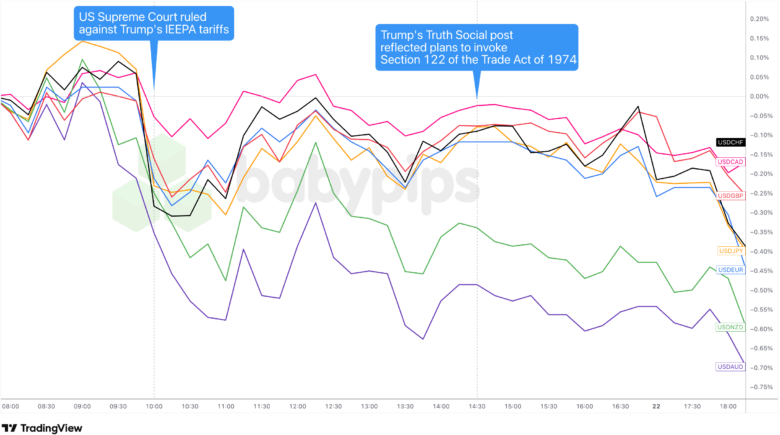
After the Supreme Court struck down the Trump administration’s sweeping IEEPA tariffs on Friday, the White House immediately fired back, slapping a 15% global tariff on imports using Section 122 of the 1974 Trade Act.
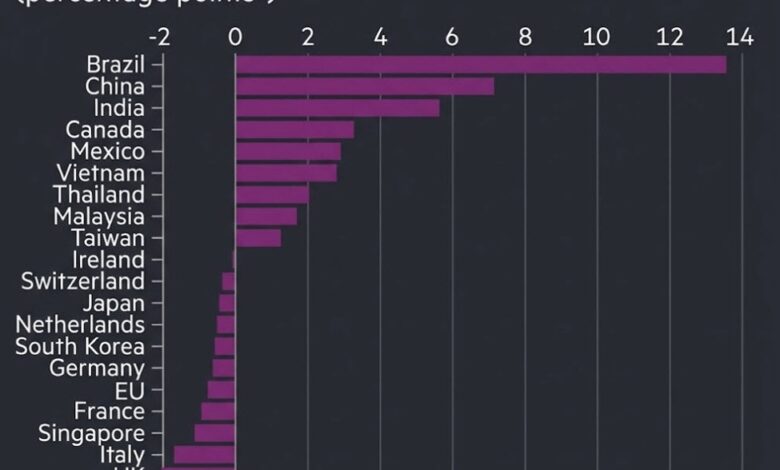
Global Trade Alert took a look at US tariff rate changes based on a 15% universal tariff (with some exemptions) and calculated the winners and losers.
The chart above highlights the massive net shift in trade-weighted tariff rates following this legal whiplash. The pivot has created a bizarre dynamic where primary targets are finding relief, while traditional allies take a hit. The lesson: Be careful in making a deal with Trump.
Emerging markets like Brazil, China, and India are the immediate beneficiaries. Because they were laboring under punitive, sky-high IEEPA duties, the shift to a blanket 15% ceiling under Section 122 actually represents a massive net reduction in their tariff burden—including a staggering 13.5 percentage point drop for Brazil.
Conversely, traditional allies are feeling the squeeze. Nations like the UK, France, and the broader EU had largely navigated the previous regime via negotiated framework deals. Now, caught in the blunt dragnet of a 15% global surcharge, they face a net increase in their effective rates. That change has led to EU Parliament pausing a vote to ratify the US deal.
At the moment, there is a report the EU tariff level will be lowered back to 10% so we’re watching out for that.
But here is the critical catch for markets: Section 122 is a ticking clock. By law, this balance-of-payments measure strictly expires in 150 days unless Congress votes to extend it.
What happens after 150 days?
Given the lack of current congressional appetite, a legislative extension is highly unlikely. The administration is almost certainly using this 150-day window to buy time while frantically building more durable legal cases under Section 301 (unfair trade practices) or Section 232 (national security) to make the tariffs permanent. If those investigations aren’t ready—or face their own legal hurdles—the 15% tariff will drop off a cliff in late July.
US trade representative Jamieson Greer said on Sunday to CBS:
“We don’t have the same flexibility that IEEPA gave us” but “we’re going to conduct investigations that can allow us to impose tariffs if it’s justified by the investigation … So we expect to have continuity in the present tariff programme.”