Japan election Sunday puts yen and bond markets on alert as Takaichi seeks strong mandate

2026-02-06 02:50:00
Japan markets are watching whether Takaichi’s likely election win delivers political stability without reigniting fiscal fears that pressure the yen and JGBs.
Summary:
-
Japan heads into a national election with polls pointing to a strong mandate for Prime Minister Sanae Takaichi, potentially reshaping the policy and market backdrop.
-
A decisive win could stabilise politics, but fiscal risks remain front and centre, especially around her proposed food sales tax suspension.
-
Markets are sensitive to funding questions, with the yen and JGBs already reacting sharply to fiscal uncertainty.
-
A weaker mandate — or policy missteps — could limit the Bank of Japan’s room to smooth market stress.
-
Geopolitical tensions with China add another layer of risk for Japan assets and currency sentiment.
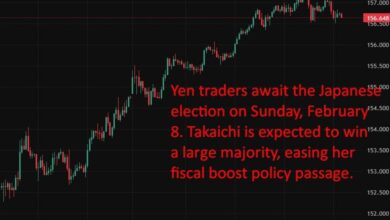
Japan’s election on Sunday is shaping up as a pivotal test for Prime Minister Sanae Takaichi, with polls suggesting her conservative bloc could secure a commanding majority, an outcome that would carry significant implications for Japanese markets, the yen and fiscal policy.
Surveys indicate Takaichi’s Liberal Democratic Party and coalition partner Japan Innovation Party could win close to 300 seats in the 465-seat lower house, well above the threshold needed for a stable majority. Such an outcome would give the government firm control of parliamentary committees, easing the passage of budgets and legislation and reducing near-term political uncertainty, typically a supportive backdrop for Japanese assets.
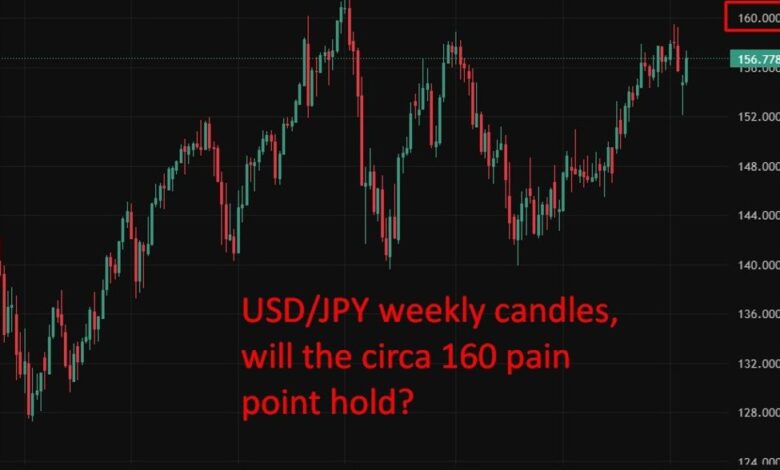
For markets, however, the election is about more than seat counts. Investors remain wary of Takaichi’s pledge to suspend the 8% sales tax on food to cushion households from rising prices. The proposal triggered a sharp sell-off in Japanese government bonds last month and pushed the yen lower, as markets questioned how an economy with the heaviest public debt burden in the developed world would absorb an estimated 5 trillion yen annual revenue shortfall. Any post-election clarification on funding or duration will be closely scrutinised by FX and rates markets.
The fiscal debate also intersects with monetary policy. Analysts note that if renewed fiscal concerns unsettle markets, the BoJ may be less willing, or able, to step in to stabilise bonds or the currency, particularly as it continues to normalise policy. That dynamic leaves the yen sensitive to both political messaging and global yield moves.
Beyond economics, a strong electoral mandate could embolden Takaichi on foreign policy, particularly in relations with China. Her hawkish stance on regional security and Taiwan has already heightened tensions with Beijing, raising the prospect of increased defence spending. While this may support certain equity sectors, it also adds a geopolitical risk premium that can weigh on the yen during periods of stress.
Japanese PM Takaichi