

تكنلوجيا اليوم
2026-02-05 16:00:00
In today’s newsletter, Glenn Williams Jr from ProShares writes about growing investment in cryptocurrencies outside of bitcoin.
Then, Michael Sena from Recall Labs answers questions about portfolio construction and diversification in Ask an Expert.
– Sarah Morton
Investors are broadening their crypto horizons
As the number of cryptocurrencies has expanded, investor appetite for broader exposure has grown. From its start with a singular transaction in 2009, the crypto ecosystem has grown to support millions of daily transactions today, and crypto’s market capitalization has grown from essentially nothing to more than $3 trillion.
Bitcoin, the asset at the heart of crypto’s early days, is still often viewed as a proxy for the entire asset class. But while bitcoin currently represents close to 60% of global crypto value, the universe of cryptocurrency is rapidly expanding, with a host of new digital assets capturing market share and ever-increasing investor attention.
The rise of the rest
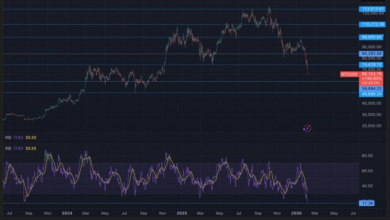
Since 2023, crypto’s market capitalization, excluding bitcoin, has grown 175%. Ether, the world’s second-largest crypto asset, has grown 142% over that period. Meanwhile, use cases for crypto assets have also been evolving at an exceedingly rapid pace. While bitcoin may be viewed as a store of value, other crypto assets offer use cases such as decentralized borrowing and lending.
Investors are also considering structural differences within the digital asset space. While some digital assets host their own blockchains (e.g., Bitcoin, Ethereum, Solana), others are built on top of existing ones, such as Uniswap and Aave. This distinction alone impacts everything from governance rights to potential cash flows. In short, the diversity amongst crypto assets evolves daily, and gaining exposure to just one (or even two) limits exposure to the entirety of the asset class.
Crypto market capitalization, excluding bitcoin
Source: TradingView, data from Jan. 1, 2023-Jan. 27,2026.
An indexed approach for evolving times
Indices such as the CoinDesk 20 Index (CD20) aim to provide investors with broad and diversified exposure to cryptocurrencies as a whole. As capital flows into digital assets, performance dispersion among index constituents may increase.
The internal rotation possibilities within cryptocurrencies can be viewed as akin to sector rotation in traditional finance. For example, correlations between CoinDesk 20 constituents and U.S. equities remain fluid, with ebbs and flows reflecting a still-maturing asset class. Still, over extended periods, correlations between cryptocurrencies and equity markets have been moderate.
Measuring the performance of the largest 20 digital assets by market capitalization (excluding stablecoins and other coins), the CD20 currently represents 90% of the total crypto asset market share. Eligibility is determined by a ranking of the largest digital assets and is guided by liquidity, custody, and exchange-listing requirements. There is a quarterly reconstitution and rebalancing in order to keep pace with changes in the crypto asset class. Additionally, the CoinDesk 20 methodology imposes a 30% cap on its largest asset and a 20% cap on all others to limit concentration in any single coin.
Benchmarks matter
For any emerging asset class, establishing benchmarks is important. Investors have developed a comfort level with them over time and reference them daily. In my opinion, the CoinDesk 20 is constructed to do the same for digital assets, organizing their inherent (yet sometimes unrealized) diversification into a liquid and investable unit of exposure.
This information is not meant to be investment advice. Any forward-looking statements herein are based on expectations of ProShare Advisors LLC at this time. Whether or not actual results and developments will conform to ProShare Advisors LLC’s expectations and predictions, however, is subject to a number of risks and uncertainties, including general economic, market and business conditions; changes in laws or regulations or other actions made by governmental authorities or regulatory bodies; and other world economic and political developments. ProShare Advisors LLC undertakes no duty to update or revise any forward-looking statements, whether as a result of new information, future events or otherwise. Investing involves risk, including the possible loss of principal.
– Glenn C. Williams, Jr., CMT, manager and investment specialist, ProShares
Ask an expert
Q: In today’s crypto market, what does meaningful diversification actually look like beyond simply holding multiple tokens?
Meaningful diversification in crypto is not about collecting tokens but about understanding risks. If everything in your portfolio moves together, you are not diversified, but are simply exposed to the same cycle in different wrappers. Real diversification means thinking beyond price charts, taking required exposure across categories like infrastructure, decentralized finance (DeFi), real-world assets and digital commodities, combined with different business models that generate sustainable value.
It also means diversifying how you operate. Custody solutions, liquidity providers, exchanges, and regulatory environments all shape outcomes as much as the assets themselves. The goal is to balance innovation with stability, capturing growth while protecting capital.
Diversification is not a numbers game but a disciplined risk management in a complex market.
Q: As correlations between crypto and traditional assets shift, how should investors rethink diversification in a more macro-driven environment?
Investors must recognize that crypto is now part of the broader financial system. As markets mature, digital assets react to the same forces as traditional assets: interest rates, liquidity, geopolitics, and regulation. Diversification, therefore, has to start with a macro view instead of a token list.
The key question is no longer “how many assets do I own,” but “what risks am I exposed to.” When global liquidity tightens, Bitcoin, equities, and tech can all move together. True diversification means balancing risk factors: inflation sensitivity, yield exposure, geography, and regulatory environments.
Portfolios should be built around strategies. Combining liquid assets with revenue-generating businesses and real-world exposure creates resilience in correlated markets, surviving better and stronger. That’s exactly what we do at BTF.
Q: During periods of volatility, where do you observe investors most commonly misinterpreting risk when attempting to diversify their crypto exposure?
The most common mistake is confusing activity with diversification. Investors buy more tokens, more chains, more narratives, assuming they have reduced risk. In reality, they often just multiply the same exposure. During volatility, correlations move toward one, and portfolios that looked diversified on paper collapse together. Liquidity risk is also widely misunderstood. Assets that appear liquid in calm markets can become impossible to exit when conditions change, which most people do not expect to happen, until it does.
Operational risk is another blind spot. Custody providers, exchanges, stablecoins, and counterparties can matter more than the assets themselves. True diversification is not about owning more but about understanding what actually protects capital in stress scenarios. Anybody who understands and sets their strategy accordingly is definitely going to win.
Q: Many still treat Bitcoin as a proxy for the entire crypto market from a treasury strategist’s perspective. How does diversification across infrastructure, issuance models, and risk profiles actually protect capital?
Bitcoin is the foundation of crypto, but it is not the whole story. From a treasury perspective, treating one asset as a stand-in for an entire industry is simply incomplete thinking.
Crypto today is an ecosystem with multiple sources of return. Infrastructure produces recurring fees. Tokenized assets are linked to real-world economics. Different issuance models create very different risk profiles. Active strategies behave differently from passive exposure. These elements do not move in lockstep, especially in volatile markets.
Diversification protects capital when risk is distributed across how value is generated. A professional approach looks beyond a single asset and builds exposure to the broader mechanics of the industry.
– Michael Sena, chief marketing officer, Recall Labs