

تكنلوجيا اليوم
2026-02-04 15:43:00
Network News
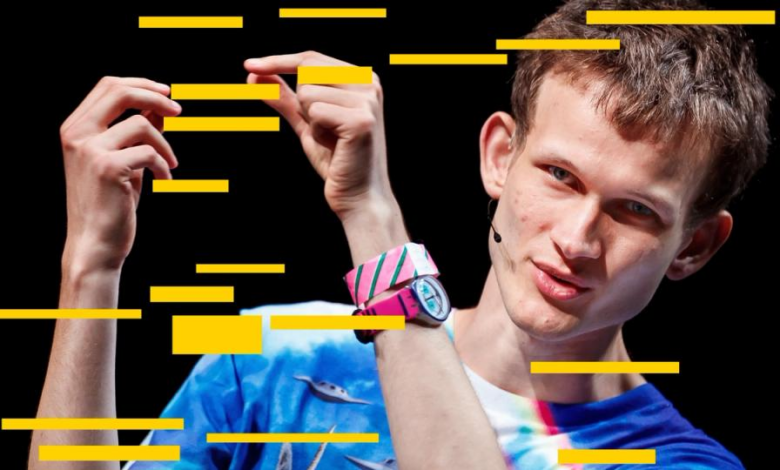
VITALIK BUTERIN SAYS LAYER-2 ROADMAP ‘NO LONGER MAKES SENSE’: Ethereum co-founder Vitalik Buterin said the role of layer-2 networks needs to be reconsidered as the blockchain’s main network continues to scale and transaction costs remain low. In a post on X, Buterin said the original rollup-centric roadmap, which positioned layer-2s as the primary way Ethereum would scale, “no longer makes sense.” That roadmap envisioned layer-2s as secure extensions of Ethereum that would handle most transactions while inheriting Ethereum’s security guarantees, often described as “branded shards” of the network. According to Buterin, two developments have challenged that original vision for layer-2 networks. First, progress among layer 2s toward later stages of decentralization has been slower and more difficult than expected. Second, Ethereum is now scaling directly on layer 1, with fees remaining low and gas limits expected to increase significantly. In his view, because Ethereum itself is scaling, layer-2 networks are no longer required to function as official extensions of Ethereum. He also noted that many layer-2s are “not able or willing” to meet the decentralization and security standards required by the model and that some layer 2s may intentionally choose not to move beyond “stage 1,” including for regulatory reasons. — Margaux Nijkerk Read more.
BITCOIN OPEN-SOURCE ALTERNATIVE: Tether released an open-source operating system for bitcoin mining, pitching it as a way to make running mining infrastructure simpler while reducing reliance on closed, vendor-controlled software. The stablecoin issuer said it rolled out MiningOS (MOS), describing it as a modular, scalable mining operating system designed for anyone from hobbyist miners to large institutions. The stack is intended to remove the “black box” nature of many mining setups, where hardware and monitoring tools are tightly tied to proprietary platforms. “MiningOS changes that — introducing transparency, openness, and collaboration into the core of Bitcoin infrastructure,” Tether said on the project’s website, adding that the system is built with “no lock-in.” According to Tether, MOS uses a self-hosted architecture and communicates with connected devices through an integrated peer-to-peer network, allowing operators to manage mining activity without relying on centralized services. The company said miners can adjust settings through a companion platform depending on the scale of their operation and output requirements. CEO Paolo Ardoino called MOS a “complete operational platform” that can scale from a home setup to an “industrial grade” site spread across multiple geographies. Tether first previewed plans for an open-source mining OS in June, arguing that new miners should be able to compete without having to depend on expensive third-party vendors for software and management tools. — Shaurya Malwa Read more.
ETHEREUM FOUNDATION POST-QUANTUM TEAM: Quantum computing has long been a distant, theoretical threat to blockchain cryptography. But over the past few months, that calculus has shifted. While the Bitcoin community has been debating threats to its protocol for the past year, the Ethereum community seems to be only now taking its first steps. “Quantum computing is moving from theory into engineering,” said Thomas Coratger, who leads the Ethereum Foundation’s (EF) post-quantum (PQ) team. “That changes the timeline, and it means we need to prepare.” Earlier in January, the foundation formally elevated post-quantum security to a strategic priority, creating that dedicated team to drive research, tooling and real-world upgrades to protect the network’s cryptographic foundations. At the same time, major industry participants are building their own defenses: Coinbase announced an independent quantum advisory board staffed with leading cryptographers to guide long-term blockchain security planning, signaling that even custodial infrastructure must prepare for quantum-era risks. And across the ecosystem, Optimism, is one of Ethereum’s largest layer-2 networks, laid out a formal 10-year roadmap to transition its Superchain stack, from wallets to sequencers, toward post-quantum cryptography, committing to phase out vulnerable signatures and ensure continuity across layer-2 networks. Together, these moves mark a noticeable shift: post-quantum security is no longer a fringe topic for the far future, but a live concern shaping development roadmaps, governance discussions and ecosystem coordination across Ethereum and beyond. For the EF, the move toward post-quantum security isn’t about sounding an alarm, it’s about not being caught flat-footed. — Margaux Nijkerk Read more.
NEW LENDING PROTOCOL FOR XRP ASSETS: The Flare blockchain introduced lending and borrowing for XRP-linked assets through an integration with Morpho, a crypto lending protocol that runs across multiple Ethereum compatible chains. The update lets users lend and borrow with FXRP, a version of XRP designed for use on Flare, the team behind the blockchain said. Flare pitched the move as a step toward giving XRP owners more ways to earn yield and use their tokens beyond holding or trading. For years, XRP has had fewer decentralized finance (DeFi) options than tokens built on smart contract networks. Flare has been trying to change that by building tools that let XRP be used in onchain apps while keeping the original XRP on the XRP Ledger. FXRP holders can now deposit their tokens to earn interest, or use FXRP as collateral to borrow other assets such as stablecoins. Flare said these positions can also be combined with other features on the network, including staking and yield products, for users who want more active strategies. Morpho differs from older lending apps that mix many assets into one shared pool. Each lending market is set up with one collateral asset and one borrowed asset, and the rules for that market are set when it is created. This structure is meant to keep problems in one market from spilling into others. — Shaurya Malwa Read more.
In Other News
- The next evolution of asset management will be “wallet-native,” not just digital, according to Franklin Templeton’s head of innovation, Sandy Kaul. Speaking at the Ondo Summit in New York on Tuesday, Kaul said she envisions a future where all financial assets — stocks, bonds, funds, and more — are held and managed through tokenized digital wallets. “The totality of people’s assets is going to be represented in these wallets,” she said. The panel, which included Cynthia Lo Bessette of Fidelity, Kim Hochfeld of State Street and Will Peck of WisdomTree, agreed that tokenization is no longer a theoretical concept. After years of slow progress, infrastructure is now in place, and use cases are expanding beyond early experiments. The panelists cautioned that building utility and trust is now the industry’s biggest challenge. “The idea of bringing an asset and representing it onchain with a token is the easiest part,” said Lo Bessette, head of digital asset management at Fidelity. “The hardest part is building the ecosystem for utility.” Despite recent growth, adoption remains early. Hochfeld, State Street’s global head of digital and cash, said much of the current work is focused on internal and client education. “We’re not yet seeing a rush to the door,” Hochfeld said. “We’ve got to experiment … and see what works.” — Helene Braun Read more.
- TRM Labs, a blockchain analytics startup used by global law enforcement and financial firms, raised $70 million in a new funding round that pushed its valuation to $1 billion. The Series C round, Fortune reports, was led by Blockchain Capital with participation from Goldman Sachs, Citi Ventures, Bessemer, Thoma Bravo and Brevan Howard. The firm, according to data from TheTie, has raised nearly $150 million to date, having seen another $70 million fundraise back in 2023, along with other smaller fundraising rounds That bring the total to $220 million. The firm’s software helps trace cryptocurrency transactions across multiple blockchains, a service increasingly in demand as crypto crime grows more complex.TRM counts several major government agencies, including the IRS and FBI, among its clients, as well as major banks. It was an early mover in tracking not just bitcoin but various other cryptocurrencies, a decision that set it apart from competitors. That edge has become more valuable as criminal networks diversify their use of tokens and platforms. — Francisco Rodrigues Read more.
Regulatory and Policy
- At a White House meeting called to thaw the ice between crypto firms and Wall Street bankers, the crypto insiders — who outnumbered the bankers by a wide margin — came away feeling the banks were dragging their heels on making a deal on crypto market structure legislation. The White House gave them all new marching orders, according to people familiar with the talks: Get to a compromise on new language on stablecoin yields before the month is out. The crypto industry’s top policy priority is still struggling to make headway in the U.S. Senate, and the longer it’s delayed from getting a floor vote in the overall Senate, the less likely it is to happen this year. The gathering — led by President Donald Trump’s crypto adviser Patrick Witt — was largely focused on whether stablecoins should be associated with yield and rewards. Policy experts from the crypto industry and Wall Street banks gathered in the White House’s Diplomatic Reception Room for more than two hours to discuss how to overhaul the stickiest provisions of the bill, the people said. The talks will continue with a narrower group, the people said, and the White House has asked them to come to the table ready to agree on actual changes to the bill’s language. One of the people said that the banking representatives were members of trade associations and may need to get buy-in from their members before they can make a move in the negotiation. — Jesse Hamilton Read more.
- Rui-Siang Lin, the alleged operator of the dark web narcotics marketplace “Incognito Market,” was sentenced to 30 years in U.S. federal prison, according to a statement from the U.S. Attorney’s Office for the Southern District of New York, bringing to a close one of the largest online drug market prosecutions since Silk Road. Lin, a 24-year-old Taiwanese national who used the online alias “Pharaoh,” pleaded guilty in December 2024 to narcotics conspiracy, money laundering and conspiring to sell adulterated and misbranded medication. Prosecutors said the platform processed more than $105 million in illegal drug sales between October 2020 and March 2024, facilitating more than 640,000 transactions and serving hundreds of thousands of buyers worldwide. “Rui-Siang Lin was one of the world’s most prolific drug traffickers, using the internet to sell more than $105 million of illegal drugs throughout this country and across the globe,” U.S. Attorney Jay Clayton said in a statement. “While Lin made millions, his offenses had devastating consequences. He is responsible for at least one tragic death, and he exacerbated the opioid crisis and caused misery for more than 470,000 narcotics users and their families.” — Sam Reynolds Read more.
Calendar
- Feb. 10-12, 2026: Consensus, Hong Kong
- Feb. 17-21, 2026: EthDenver, Denver
- Feb. 23-24, 2026: NearCon, San Francisco
- Mar. 30-Apr. 2, 2026: EthCC, Cannes
- Apr.15-16, 2026: Paris Blockchain Week, Paris
- May 5-7, 2026: Consensus, Miami
- Nov. 3-6, 2026: Devcon, Mumbai
- Nov. 15-17, 2026: Solana Breakpoint, London