
Gold’s surge reflects structural demand, Goldman says. Favours gold-equity barbell.

2026-02-03 00:37:00
Goldman Sachs says gold’s rally is structurally driven by central bank dollar diversification, not speculative excess, supporting a long-term role for the metal in portfolios.
Summary:
-
Goldman Sachs sees gold’s surge as structurally driven, not speculative excess
-
Central bank diversification away from the US dollar is the key catalyst
-
Gold markets are small, amplifying the price impact of incremental demand
-
Speculative positioning remains limited relative to historical episodes
-
Goldman favours a barbell approach pairing equities with gold, not bonds
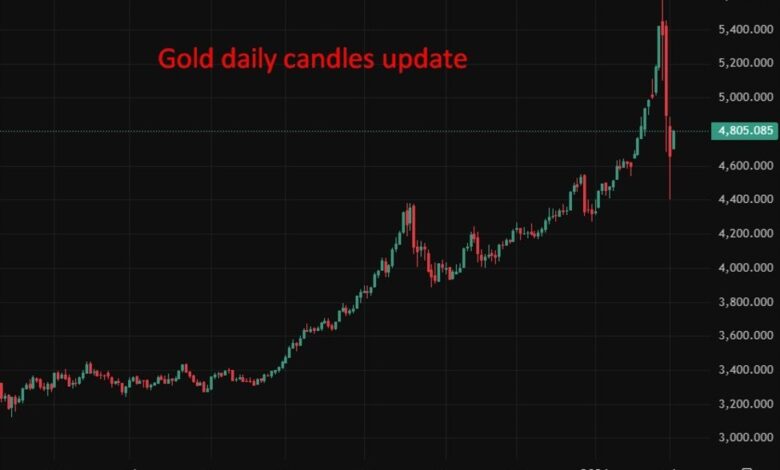
Goldman Sachs says gold’s powerful rally through 2025 and its strong start to 2026 reflect deep structural forces rather than speculative excess, with central bank reserve diversification emerging as the dominant driver of price action.
The bank argues that the shift by global central banks away from the US dollar and toward precious metals has materially altered gold’s demand profile. Unlike equities or fixed income, the gold market is relatively small, meaning even modest changes in official-sector demand can have outsized effects on prices. Goldman notes that this dynamic helps explain the speed and scale of gold’s recent gains.
According to the firm, speculative participation in gold remains limited. Only a small share of the global gold stock is held by financial speculators, suggesting the rally has not been fuelled by the type of leveraged positioning typically associated with market manias. Instead, the price response has been driven by long-term, balance-sheet decisions by central banks seeking to reduce reliance on dollar-denominated assets.
Goldman also frames the recent surge as a partial catch-up after a prolonged period of underperformance. Between 2010 and 2020, gold prices were broadly range-bound while growth-oriented equities delivered outsized returns. The firm argues that the current cycle reflects a rebalancing of asset preferences rather than a late-stage bubble.
While Goldman does not expect gold to continue appreciating at the same exponential pace seen over the past year, it remains comfortable with the broader trajectory. The bank sees scope for further gains as reserve diversification continues, even if returns moderate and volatility increases along the way. Importantly, it does not see signs of widespread froth across the precious metals complex.
From an asset-allocation perspective, Goldman is advocating a refreshed version of the traditional barbell strategy. Rather than pairing equities with fixed income, the bank sees a stronger case for combining equities with gold, arguing that precious metals offer diversification benefits in an environment marked by geopolitical uncertainty, fiscal slippage and shifting currency regimes.
In this framework, gold functions less as a tactical trade and more as a strategic hedge against structural change in the global monetary system. As central banks reassess reserve composition and investors adapt to a less dollar-centric world, Goldman believes gold’s role in portfolios is likely to remain elevated well beyond the current cycle.
—
A barbell strategy means holding two contrasting assets at opposite ends of the risk spectrum, in this case equities for growth and gold for protection, while minimising exposure to the middle (traditionally bonds).