BoJ: Moderate recovery, inflation persistence reinforce cautious further tightening case

2026-02-01 23:59:00
BoJ policymakers signalled moderate economic momentum and stickier inflation trends, endorsing careful future rate increases if forecasts unfold as expected.
Summary:
-
BOJ policymakers agreed the Japanese economy has recovered moderately but noted uneven momentum in parts of the economy.
-
Inflation is projected to continue rising moderately, underpinned by wage and price interactions and import pass-through.
-
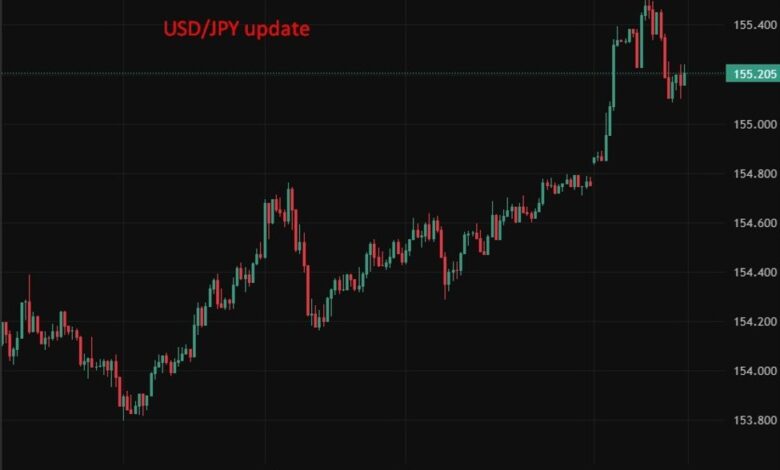
The depreciation of the yen is seen as adding to domestic price pressures via higher import costs.
-
Financial conditions remain broadly accommodative even after recent policy tightening, and further rate increases were judged appropriate over time.
-
Board members emphasised careful, timely policy adjustments to balance price stability and economic resilience.
The Bank of Japan (BOJ) released the Summary of Opinions from its January 22–23 Monetary Policy Meeting, shedding light on how board members currently view economic and price conditions ahead of the next policy decisions. While the economy has shown signs of moderate recovery, policymakers highlighted a mix of opportunities and risks that could shape future monetary moves.
Overall economic activity in Japan was judged to have regained moderate momentum, supported by recoveries in global demand and government economic measures. However, some sectors still show uneven performance, and external policy shifts in key trading partners continue to influence the domestic outlook. The BOJ’s assessment is in line with its recent quarterly Outlook for Economic Activity and Prices report, which projects continued moderate growth partly supported by accommodative global conditions.
On inflation, members expect consumer prices to continue rising at a moderate pace, with an ongoing interaction between wages and prices underpinning this trend. The pass-through of rising personnel costs into prices is considered moderate so far, though the impact of higher import costs, amplified by the weak yen, remains a key factor in price dynamics. Policymakers emphasised the need to monitor the balance between inflation, wages, and household income, especially as government measures and fiscal policy also play a role in shaping real income trends.
Views on monetary policy reflect a cautious but increasingly vigilant stance. Even after the BOJ’s December decision to raise the policy rate to a level not seen in decades, financial conditions were judged to remain accommodative. Some members pointed to the appropriateness of continuing gradual rate increases if the current outlook materialises, with emphasis on careful timing and consideration of economic feedback effects. The board also discussed how to manage policy communication effectively to avoid lagging behind emerging price pressures, including risks tied to exchange rate movements.
Long-term bond market developments and volatility in super-long Japanese government bond yields were noted as areas requiring ongoing attention, with indications that flexible responses could be needed under exceptional market conditions. In this context, members signalled that further adjustments to policy accommodation should be made in a timely way, without pre-commitment to a set pace but with responsiveness to data on prices, growth, and financing conditions.
Government representatives attending the meeting underscored the importance of appropriate monetary policy coordination alongside fiscal efforts to achieve sustainable price stability and economic growth, highlighting cooperation under the Bank of Japan Act and shared objectives toward the inflation target.
Full text here:
Earlier: