
2026-02-01 23:19:00
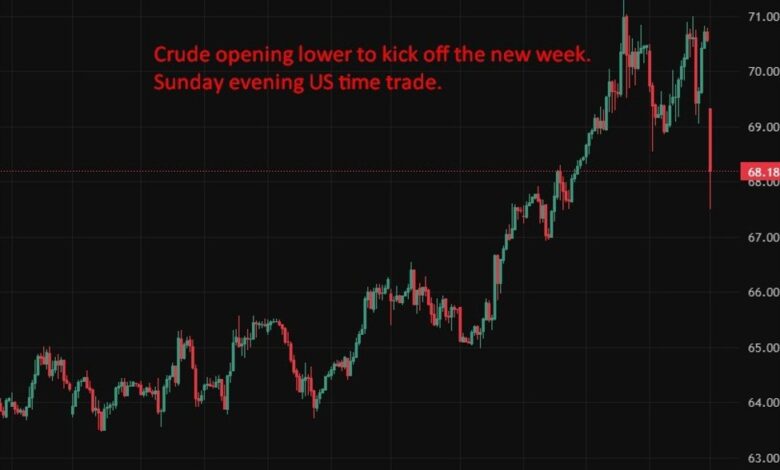
Oil opens softer as traders fade some geopolitical premium, while OPEC+ keeps March output unchanged and leaves the post-March path deliberately open.
Summary:
-
Oil is starting the week on the back foot after a strong run-up, as traders reassess how much geopolitical risk is already priced in.
-
OPEC+ agreed to hold output policy steady for March, extending the first-quarter pause in planned increases.
-
The group offered no guidance beyond March, keeping optionality high as uncertainty around Iran and demand trends persists.
-
US–Iran tensions remain a two-way risk: escalation would tighten supply perceptions, but talk of dialogue can also drain the risk premium quickly.
-
Supply noise from Kazakhstan (including disruption/restart dynamics around the Tengiz oilfield) is another variable supporting recent tightness, even as 2026 “oversupply” debates linger.
Oil prices are opening lower to begin the week, with markets taking a breath after a sharp January rally and a run toward six-month highs. The early pullback fits a familiar pattern: when crude rallies hard on geopolitical headlines, the next session often tests whether the “risk premium” can stay embedded without fresh escalation.
The weekend decision from OPEC+ adds to the cautious tone. The group’s eight key producers, led by Saudi Arabia and Russia, reaffirmed that they will keep March output policy unchanged, extending the pause on planned increases that had already been rolled over for January and February. The pause followed a 2025 period in which quotas were lifted by roughly 2.9 million barrels per day from April through December, before the group opted to freeze further increases into early 2026 amid seasonally softer demand.
What markets are noticing most was not just the hold, but the lack of forward guidance beyond March. That ambiguity matters because it keeps traders guessing about the group’s reaction function into Q2, when demand patterns and the “call on OPEC+ crude” can shift materially. It also signals that the alliance wants maximum flexibility while geopolitical risks remain fluid.
Geopolitics remains the key swing factor. Reports that Donald Trump is weighing options on Iran, alongside indications both sides are at least signalling openness to talks, creates a wide distribution of outcomes. Escalation could rapidly lift crude via disruption fears; de-escalation can just as quickly compress the premium.
Meanwhile, supply-side noise from Kazakhstan has been an additional support in recent sessions, with disruptions and staged restarts at the giant Tengiz complex tightening near-term balances at the margin.
For now, crude’s softer open looks less like a fundamental regime change and more like positioning and risk-premium management: OPEC+ is steady, geopolitics is unresolved, and demand—especially from large importers—remains the big variable the cartel cannot control.