


The UK’s top financial regulator is finalizing its framework for the crypto industry. The rulemaking process has been long, but industry observers note that the country has avoided the political tit-for-tat that is hampering the US CLARITY Act.
On Jan. 23, the Financial Conduct Authority (FCA) released its final consultation. The public may now comment on its suggested framework, consisting of 10 regulatory proposals. The three-year process is expected to reach a conclusion in March, with full implementation by October 2027.
The proposed rules have gone through multiple iterations since 2023, as some observers expressed concern that the UK would fall too far behind other countries in the crypto regulatory race.
With the UK poised to have a solid framework for crypto by the end of Q1, it appears to have caught up, at least in part, to the US.
FCA centralization a key difference with US CLARITY Act
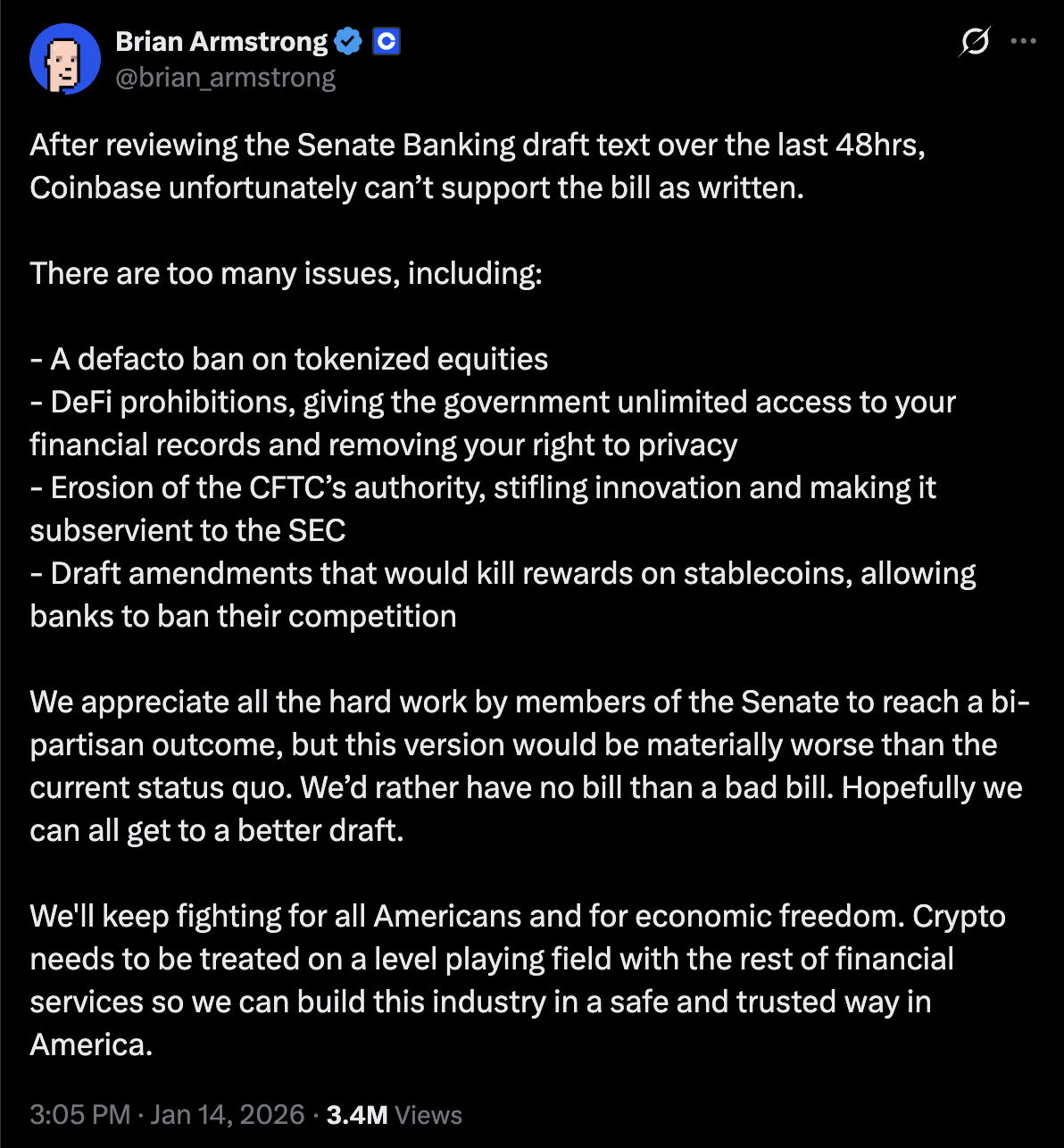
Over the last six years, major economies around the world have raced to form legal frameworks for crypto. In the United States, Congress has passed a stablecoin law, the GENIUS Act, and attempted to pass a crypto framework bill. However, lawmakers hit a snag with the CLARITY Act when major crypto exchange and crypto lobby contributor Coinbase pulled its support.
Nick Jones, CEO and founder of UK-based digital assets platform Zumo, told Cointelegraph that the UK has largely avoided this kind of hiccup, thanks to the FCA’s consultation processes. The timeline has delivered a regulatory regime “that takes all stakeholders’ concerns into account.”
“It should help us to avoid the current malaise seen in the US, where Coinbase’s decision to withdraw support for the CLARITY Act sent shockwaves through the digital assets sector and risks derailing market structure reform.”
There are notable differences between the US’ proposed CLARITY Act and the FCA’s proposed policies. One prominent example is the UK’s centralized approach to crypto regulation. The UK only has one securities and commodities regulator, the FCA. In its framework, the FCA has set out which assets are subject to which rules.
In the US, there is still some discussion over which agency will regulate certain parts of the crypto sector: the Commodity Futures Trading Commission or the Securities and Exchange Commission. States also have their own financial enforcement agencies and requirements, like New York’s BitLicense regime.
This particularly holds true for stablecoins. Partners at Morrison and Forrester noted, “The UK regulatory regime for stablecoins is centralized, with a single national regime integrating stablecoins into financial services law.”
The US, by contrast, “creates a federal and state licensing regime for stablecoins issuers, involving participation by multiple states, federal banking regulators, and the U.S. Treasury.” The firm said that these differences could end up creating interoperability issues and “compliance friction across markets.”
Related: US crypto market structure bill in limbo as industry pulls support
UK crypto rules differ from Europe’s MiCA, too
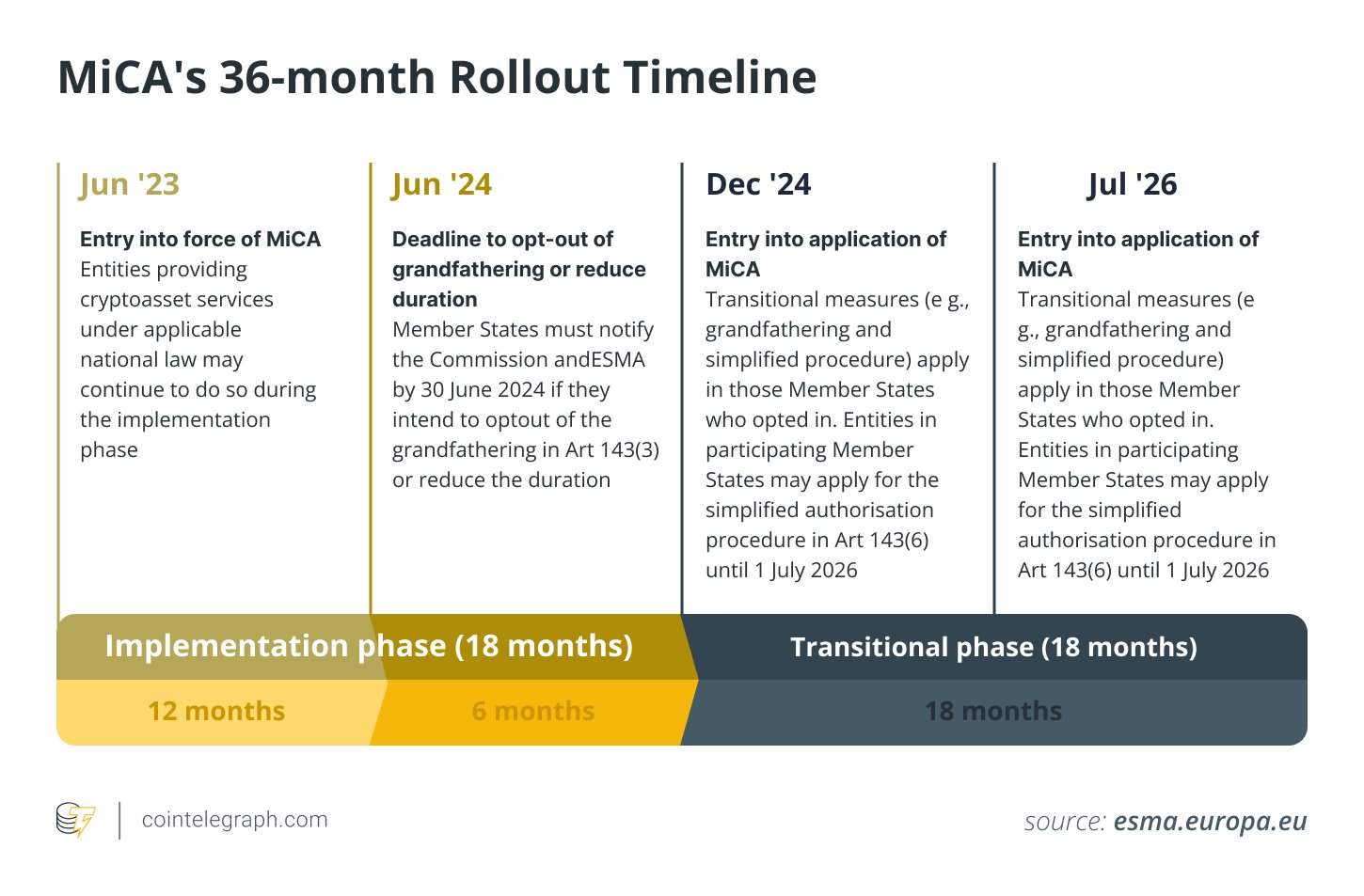
From 2020 to 2024, the European Union worked to develop its Markets in Crypto-Assets (MiCA) framework, which regulates the crypto market across the 27 member states.
Jones stated that the FCA rules differ significantly from the continental approach and send a message that “digital assets can successfully coexist in a reimagined future financial system. That’s a strong statement of intent.”
They’ve done so by “legislating to extend existing financial regulation to companies involved in crypto, rather than producing complicated rules tailored to the industry as seen with [MiCA],” said Jones.
Marcus Bagnall, a partner at law firm Wiggin, wrote that the proposed FCA framework avoids grafting a “light-touch, ‘MiCA-style’ wrapper on to an unregulated sector.” He said that the result is a costlier and heavier regulatory regime, but one that is “more due-diligence-ready for institutional money than MiCA.”
Luigi Cantisani of Futura Law said, “Services that are currently unregulated under MiCA but brought into scope in the UK could significantly increase the regulatory burden for firms seeking to serve UK clients.”
FCA integrates crypto with wider financial system
In 2020, the FCA began a years-long process of forming crypto regulations when it became the Anti-Money Laundering and Counter-Terrorism Financing adviser for the UK’s crypto industry.
Three years later, in September 2023, it took steps to enforce the controversial Travel Rule. This requires crypto service providers to collect and share user and transaction data with authorities.
Two months later, in November, policy-making began in earnest when the FCA published a discussion paper on stablecoins. Since then, it has released several more on topics that include crypto custody, disclosures and market abuse.
UK crypto hub ambitions are back
Jones said that many in the industry have been “loudly lobbying for the appropriate regulatory framework that will facilitate new avenues of economic growth.”
In April 2022, Prime Minister Boris Johnson launched a strategy to make the country a “crypto hub.” Soon after, the market crashed, and the project was put on the backburner.
Related: UK crypto hopes stall, but ‘encouraging signs’ are there
“The industry has been waiting for some time for the UK to make good on its ‘UK Crypto Hub’ ambitions,” Jones explained. “The main ask has been for operational clarity that will allow crypto asset businesses to develop in the UK at scale.”
With clear rules on the horizon, the UK’s “crypto hub” may finally get a new start. Jones said the FCA’s new framework will put an end to off-shoring and unregulated business models.
“There has never been a better time for crypto asset businesses to realize UK opportunities at scale.”
He claimed that the benefits will be felt by retail customers, who will now have “specific assurances related to how their assets are held, as well as a tangible set of investor protections and the assurance of interfacing with regulated businesses held to the stringent standard of UK financial services.”
Magazine: A ‘tsunami’ of wealth is headed for crypto: Nansen’s Alex Svanevik
Cointelegraph Features and Cointelegraph Magazine publish long-form journalism, analysis and narrative reporting produced by Cointelegraph’s in-house editorial team and selected external contributors with subject-matter expertise. All articles are edited and reviewed by Cointelegraph editors in line with our editorial standards. Contributions from external writers are commissioned for their experience, research or perspective and do not reflect the views of Cointelegraph as a company unless explicitly stated. Content published in Features and Magazine does not constitute financial, legal or investment advice. Readers should conduct their own research and consult qualified professionals where appropriate. Cointelegraph maintains full editorial independence. The selection, commissioning and publication of Features and Magazine content are not influenced by advertisers, partners or commercial relationships.