GBP’s Initial Gains Reverse Despite Hotter UK Inflation as Risk Sentiment Shifts

2026-01-22 02:07:00
U.K. consumer price inflation rose to 3.4% year-on-year in December, up from 3.2% in November and slightly above the 3.3% market consensus, marking the first increase in five months.
The uptick was driven primarily by higher tobacco prices following duty increases announced in the late November Budget and a sharp rise in airfares linked to Christmas travel timing, with the Office for National Statistics noting that return flight dates fell earlier in December 2025 compared to 2024.
Despite the headline increase, the softer-than-expected core readings and expectations for sharp declines ahead kept Bank of England rate cut expectations intact, with markets continuing to price a minimal chance of a February move but maintaining expectations for cuts later in the year.
Key Takeaways
- Headline CPI climbed to 3.4% in December from 3.2% in November, coming in above the 3.3% consensus forecast but below the BOE’s November projection of 3.5%
- Core inflation (excluding food, energy, alcohol, and tobacco) held steady at 3.2%, matching November’s reading and coming in slightly below the expected 3.2% rise
- Services inflation rose to 4.5% from 4.4%, in line with expectations and closely watched by the BOE as a gauge of domestic price pressures
- Food inflation accelerated to 4.5% from 4.2%, with bread, cereals, and vegetables contributing to the increase
- Tobacco prices surged 3.0% on a monthly basis following duty increases implemented on November 26, 2025, compared to a 0.7% rise in December 2024 when duties were raised in late October
- Airfares jumped 28.6% in December 2025 versus a 16.2% increase in December 2024, with the ONS noting the timing difference in return flight collection dates affecting the comparison
Despite the numbers, markets continue to price in one or possibly two quarter-point rate cuts by the BOE in 2026, with financial markets ruling out a February cut but expecting gradual easing as inflation pressures diminish
Link to official ONS Consumer Price Inflation December 2025 Report
Market Reactions
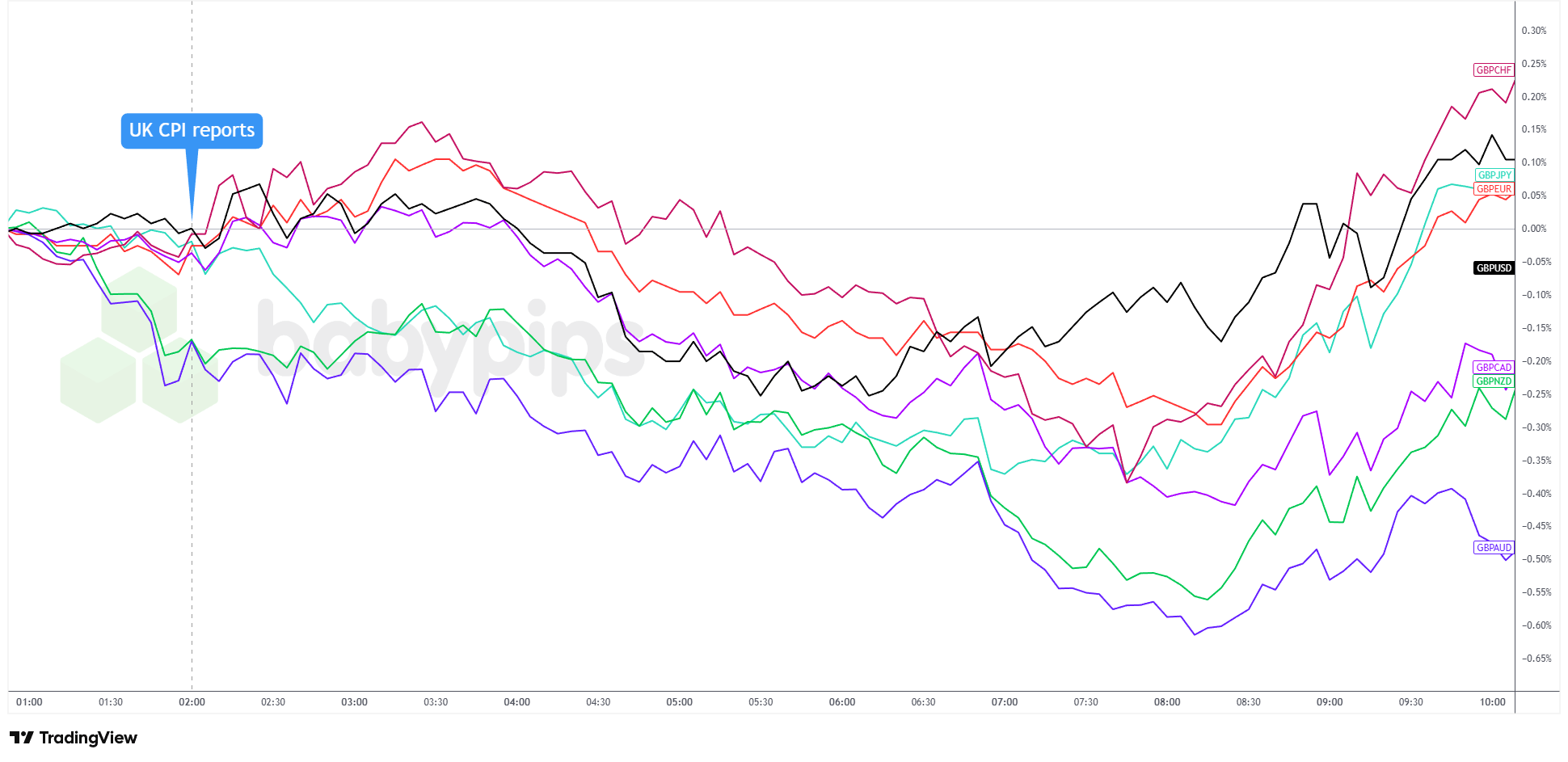
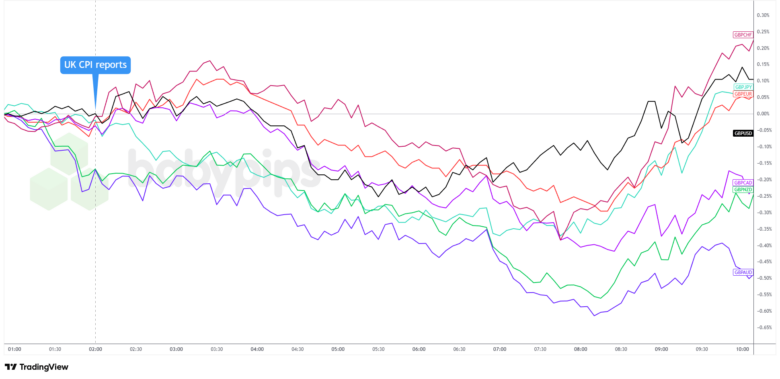
British Pound vs. Major Currencies: 5-min
The British pound, which had been trading lower in early European trading, swung higher immediately following the hotter-than-expected inflation report at 07:00 GMT. Sterling jumped as the 3.4% headline print exceeded the 3.3% consensus, boosting expectations that elevated inflation could delay BOE rate cuts.
However, the upswing was short-lived. In less than an hour, traders refocused on underlying details showing core inflation unchanged at 3.2%—below BOE projections—while broader market attention returned to escalating U.S.-EU trade tensions, with President Trump’s threats of 10% tariffs on European countries, including the U.K., dominating sentiment.
Just over an hour after the release, the pound turned decisively lower across major pairs. GBP/USD slipped back below $1.3440 as macro concerns reasserted themselves. The pound maintained a bearish lean through the London morning session, underperforming against the dollar and commodity currencies.
Around the U.S. session open, broader risk sentiment turned positive, providing temporary relief for Sterling. However, GBP swung lower again around the London close, possibly on profit-taking.
By day’s end, sterling finished mixed—higher against the yen, euro, and Swiss franc but lower against the dollar, Canadian dollar, Australian dollar, and New Zealand dollar. The divergent performance highlighted how GBP was caught between the marginally firmer inflation data and trade war concerns dominating broader sentiment.