
Bitcoin is in the blast radius after Japan’s bond market hit a terrifying 30-year breaking point



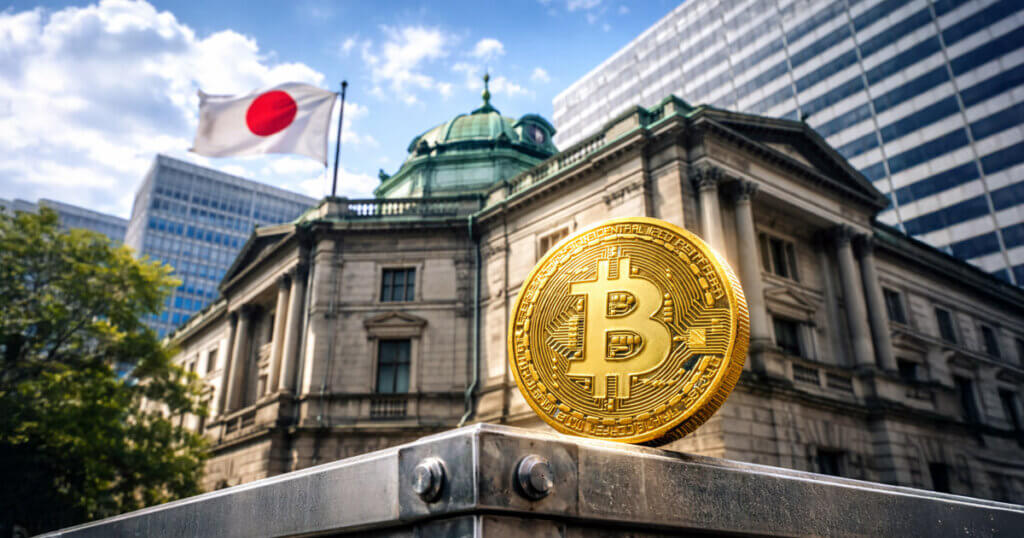



At first glance, this looks like a story that lives on the back pages of a newspaper, Japanese government bonds with maturities that run so long they sound like a joke, 20 years, 30 years, 40 years.
If you own Bitcoin, you still end up in the blast radius.
Because when Japan’s long-dated bonds start to wobble, it is rarely just about Japan. It is about the world’s last big source of cheap money slowly turning into something more expensive, and what happens to every trade that quietly depended on that cheap funding.
The moment the mood changed
Japan has spent most of the last few decades as the place where money was close to free. That shaped global markets in a thousand small ways, even if you never bought a Japanese bond in your life.
Now that era is fading.
In December, the Bank of Japan lifted its benchmark rate to 0.75%, the highest level in roughly 30 years, part of a broader shift away from ultra-low policy that defined the country’s post-1990s playbook.
That move matters because Japan is not a small player. It is a funding hub. It is a reference point. It is the place global investors could point to when they wanted to borrow cheaply, hedge later, and hunt for returns somewhere else.
When that cheap anchor starts lifting, markets adjust, sometimes gently, sometimes all at once.
The signal people can’t ignore, long bonds are screaming
The fresh red flag is coming from the far end of Japan’s yield curve, the super-long bonds.
Japan’s 40-year government bond yield pushed above 4% for the first time, hitting around 4.2% as selling pressure built, and a recent 20-year auction showed weaker demand with a bid-to-cover ratio of 3.19, below its 12-month average.
Even if you do not live in bond world, that is the kind of detail traders circle with a thick marker. Auctions are where the market reveals how much real appetite exists for the debt being issued. When demand starts slipping at the long end, investors start asking harder questions about who the marginal buyer is going forward, and how much yield Japan will have to offer to keep funding itself smoothly.
A second datapoint makes the shift feel less like a blip. Japan’s 30 year government bond yield has climbed to about 3.46%, up sharply from about 2.32% a year earlier.
This is what a regime change looks like in slow motion, one auction, one basis point, one nervous headline at a time.
Why crypto ends up involved
Crypto loves to tell stories about being outside the system. The price still lives inside the system.
When rates rise, especially long-term rates, the entire market has to rethink what tomorrow’s cash is worth today. Higher yields raise the bar for every risky bet, stocks, private credit, venture, and yes, Bitcoin.
BlackRock put it bluntly in a recent note on crypto volatility, Bitcoin has historically shown sensitivity to USD real rates, similar to gold and some emerging market currencies, even if its fundamentals do not depend on any single country’s economy.
So when Japan’s moves ripple into global yields, Bitcoin can react before anyone finishes explaining the bond math on TV.
We have already seen a version of that movie lately. Global bonds sold off after hawkish comments from BOJ Governor Kazuo Ueda, and Bitcoin fell 5.5% in the same session, extending its monthly drop to more than 20%.
That is the bridge between “Tokyo bond auction” and “why did my crypto portfolio just bleed.”
The quiet mechanism behind the drama, the yen carry trade
There is a plumbing story here, and it matters more than the headlines.
For years, one of the simplest trades in global finance was borrowing in yen at very low rates, then putting that money to work in higher-yielding assets elsewhere. It does not always show up as a single obvious position you can point at; it shows up as a backdrop, as a source of steady demand for risk and yield.
When Japan tightens, that backdrop changes.
If the yen strengthens or funding costs rise, that carry trade can unwind. Unwinds tend to be messy because they are driven by risk limits, margin calls, and crowded exits.
The Bank for International Settlements studied a volatility burst and carry trade unwind in August 2024 and described how large FX carry positions were especially sensitive to spikes in volatility and were forced to unwind quickly.
You do not need to believe crypto is “part of the carry trade” to see the connection. You just need to accept that when leverage gets pulled out of the system, the most liquid risk assets often get sold first, and Bitcoin is one of the most liquid risk assets on the planet.
Japan’s bond story is also a political story, and politics moves yields fast
The long end of Japan’s curve is reacting to policy uncertainty too. The 40-year yield jump is tied to investor anxiety over a snap election and fiscal plans, the kind of political catalyst that can turn a slow grind into a sudden lurch.
Markets can tolerate a lot, they hate guessing games about issuance, spending, and the future buyer base for government debt.
If investors begin to suspect Japan will be leaning more heavily on the bond market, and doing so while its central bank is less willing to suppress yields, they demand more compensation. That is what a rising long bond yield often represents, the market asking to be paid more for time and uncertainty.
The crypto angle that lasts longer than today’s price action
The durable question is simple, does Japan’s shift keep global financial conditions tighter than markets are expecting.
If the answer is yes, crypto’s upside gets capped, rallies become choppier, leverage becomes more fragile, and every risk flare-up feels sharper.
If the answer is no, and Japan’s transition stays orderly, then the bond market stops being the main character, and Bitcoin goes back to trading its usual mix of liquidity, positioning, and narrative.
There are a few forward paths worth mapping, and none of them require pretending anyone can predict a Bitcoin candle.
Three scenarios worth watching next
1) Orderly normalization
Japan continues raising rates gradually, the bond market absorbs it, auctions stay decent, yields stay high but stop behaving like a panic meter.
In this world, the pressure on crypto shows up as a steady headwind. Higher risk-free returns compete with speculative appetite. Bitcoin can still run, especially if other forces turn supportive, but the market keeps looking over its shoulder at real yields.
2) Auction stress turns into a global duration tantrum
More weak auctions, more headlines about demand, more volatility at the long end.
Global yields jump as relative value traders adjust and as investors worry about repatriation flows, then equities and crypto take the hit.
The recent example is already on the tape, global bonds slid on hawkish BOJ signals, and Bitcoin dropped 5.5% on the day.
This scenario tends to look like forced selling. Fundamentals become background noise.
3) Policy response calms the market
Japan’s officials push back hard against disorderly moves, issuance choices shift, bond buying operations, and guidance are used to cool volatility, and yields stop surging.
That can loosen global conditions at the margin, simply by removing a source of stress. Bitcoin responds the same way it often does when the market senses less pressure from rates and funding.
The point is not that Japan “helps crypto,” the point is that global liquidity expectations shift.
The simple dashboard, what to watch if you want the earliest tells
If you want to stay ahead of the story, you do not need twenty indicators. You need a handful.
- Japan’s long bond yields, especially the 30-year and 40-year.
- 20-year and 30-year auction strength, including bid-to-cover ratios.
- USDJPY, because carry dynamics often surface there first.
- US real yields, because Bitcoin has a history of reacting to them.
- Volatility spikes, because carry positions can unwind fast when vol rises.
Where stablecoins fit, the overlooked side channel
This part gets missed in a lot of crypto coverage.
Crypto has its own internal money system, stablecoins act like the cash register. When monetary policy shocks hit traditional markets, stablecoin liquidity can move too, which changes crypto market conditions even if on-chain narratives stay the same.
A BIS working paper on stablecoins and monetary policy found that US monetary policy shocks drive developments in both crypto and traditional markets, while traditional markets do not react much to crypto shocks in the other direction.
That supports the broader point that crypto is downstream of macro funding conditions more often than it wants to admit.
Why this “Japan story” keeps showing up in Bitcoin’s chart
Somewhere in Tokyo, there are insurers and pension managers staring at the same problem everyone is staring at, yield has returned, and it comes with volatility attached.
Somewhere else, there is a crypto trader in New York or London watching Bitcoin chop sideways, wondering why a move in Japanese bonds is pulling on their screen.
This is why.
Japan is changing the price of money after decades of holding it down. That adjustment is reaching into every corner where leverage and risk live, and crypto sits right there, liquid, global, always open, always ready to react.
If Japan’s bond market stays calm, crypto gets a cleaner runway.
If Japan’s long end keeps throwing off stress signals, the market is going to keep learning the same lesson, Bitcoin trades on the future, and the future is priced in yields.