Risk-off Tuesday hit US assets, raising Trump Davos de-escalation probability (TACO, yum!)

2026-01-21 03:38:00
A policy-driven “sell America” shock hit stocks, the dollar and volatility gauges on Tuesday, increasing the odds Trump softens his stance in coming days to calm markets.
Summary:
-
US stocks suffered their worst session since October, pushing key indexes negative for 2026.
-
VIX spiked toward 21 as investors scrambled for protection.
-
Dollar weakened and gold hit fresh records, consistent with a “sell America” pulse.
-
Markets reacted to escalating foreign-policy risks tied to Greenland and Europe.
-
Trump’s Davos appearance and talks with European leaders create scope for a tactical de-escalation.
Markets on Tuesday delivered a clear “sell America” signal as investors recoiled from escalating foreign-policy risk out of Washington, with US equities, the dollar and Treasuries all moving in ways that suggested a sudden rise in risk premia tied to policy uncertainty.
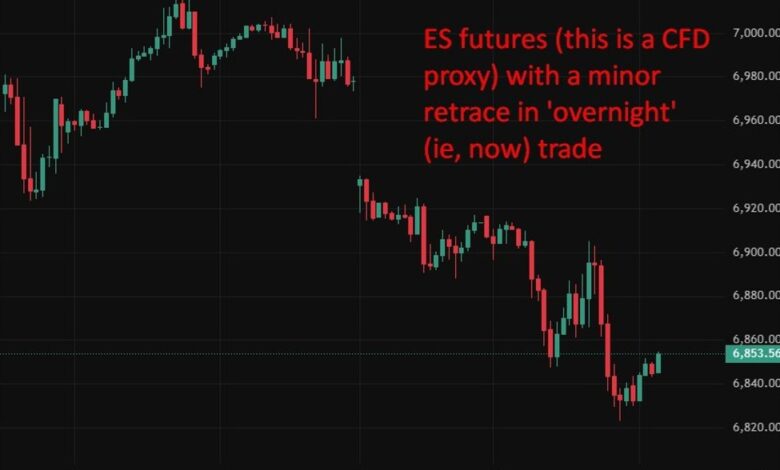
All three major US equity benchmarks posted their steepest declines since October, dragging the S&P 500 and Nasdaq Composite into negative territory for 2026. The S&P 500 fell 2.06%, the Dow dropped 1.76% and the Nasdaq slid 2.39%. Volatility also jumped, with the VIX rising toward the 21 level, a sign that investors rushed to buy protection as confidence wobbled.
At the same time, the dollar weakened and gold surged to fresh records, reinforcing the sense that markets were seeking safety from policy-driven uncertainty. Bond yields also rose, consistent with investors demanding more compensation for holding longer-duration US assets amid an increasingly unsettled macro and political backdrop.
The catalyst was an intensifying geopolitical narrative around President Donald Trump’s Greenland ambitions and the risk of a broader standoff with Europe. Trump is due to speak in Davos on Wednesday and said he had agreed to talk with European leaders at the World Economic Forum, a move that may provide an off-ramp.
That matters because sharp market drawdowns often act as a constraint on the White House’s negotiating posture. If the administration’s strategy is perceived as pushing markets toward tighter financial conditions, lower equities, higher yields, a weaker dollar, it can quickly become self-defeating. This is the core of the “TACO” case: after markets deliver a visible penalty for heightened confrontation, the incentives shift toward de-escalation, reframing, or a tactical backdown to stabilise conditions.
In the days ahead, investors will watch whether Trump uses Davos to soften his tone, emphasise deal-making, or signal a willingness to find “common ground” with Europe. Even limited messaging shifts can damp volatility, especially if markets have already priced a worst-case path. If rhetoric cools and risk appetite returns, Tuesday’s “sell America” burst may prove more of a pressure-release event than the start of a sustained trend.