
The silver market has been one of the hottest commodity stories in financial markets this week. Prices have surged, volatility has risen, and traders — from retail speculators to industrial buyers — are talking about one key development: China’s decision to tighten control over silver exports starting January 1, 2026. This emerging narrative is reshaping how silver is priced, traded, and valued in 2026 and beyond.
Here’s what you need to know — in trader-friendly terms.
What’s Happening With China and Silver?
China’s Ministry of Commerce has introduced new export restrictions on silver, effective January 1, 2026, that require government-issued licenses for firms to ship silver overseas. These rules favor large, state-certified producers and limit exports from smaller players. The goal is to secure domestic supply for China’s rapidly growing industrial needs, especially in sectors like solar, electronics, and electric vehicles.
China plays a major role in global silver production and refining, meaning changes to how its silver flows internationally can have a big impact on markets worldwide.
Why Are Traders Talking About It?
Here are the key trading drivers pushing silver into the spotlight:
1. Prices Have Jumped
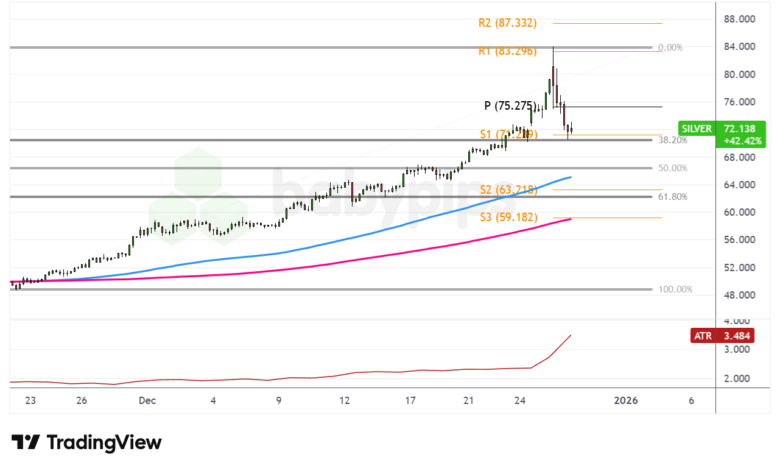
Silver prices have climbed since November, but dramatically so this past week to touch the mid-$80’s before pulling back today. Even with the pullback, silver is up a monster 48% in just over a month.
2. Supply Concerns Are Rising
Before these export controls, global silver supply was already under pressure. China historically supplied a significant share of the world’s silver — and tightening exports can amplify supply imbalances. Analysts say the export licensing rules could cut available international supply sharply because only larger firms qualify for permits.
This matters for traders because when supply potential shrinks while demand stays firm, prices tend to rise — especially in markets where physical metal is already tight.
3. Industrial Demand Is Strong
Silver isn’t just an investment metal — it’s a critical industrial metal. Its electrical and thermal conductivity make it essential in things like:
- Solar panels
- Electric vehicles
- Electronics
- Advanced industrial components
With global demand growing — and China prioritizing domestic industrial use — export restrictions increase the pressure on the remaining global supply chain.
What Are Market Leaders Saying?
Commentary from high-profile figures has amplified the conversation. For example, Tesla CEO Elon Musk publicly reacted to the export news on social media, calling the move “not good” because silver plays a vital role in industrial processes. His remarks helped bring broader attention to the issue.
Market strategists view this development as more than a short-term ripple — it’s part of a structural reshaping of how silver flows through global markets.
How Does This Affect Traders?
Here’s a practical breakdown for developing traders:
Price Action and Volatility
- Expect continued volatility in silver prices as markets digest the export news and real supply data.
- Short-term spikes or pullbacks are likely — commodity markets love uncertainty.
Physical vs. Paper Silver
Physical silver (bars, coins, physical ETFs) may trade at different prices than paper futures because physical holdings get tighter. Understanding the paper vs. physical dynamics is key for traders.
Trading Opportunities
- Breakouts above key levels like $84 per ounce can attract trend traders and breakout momentum strategies.
- Pullbacks after sharp moves may offer new opportunities to ride the trend if the fundamental story driving the trend is expected to continue to have the most weight.
Industrial Demand Signals
Watch data on global industrial activity — particularly in tech and renewables — because it can drive real demand for silver beyond speculative trading.
What Are the Risks?
It’s important for new traders to remember:
- Policy shifts can change quickly. Export rules could be adjusted, delayed, or interpreted differently in 2026.
- Silver is volatile. Commodities often swing hard on rumors and positioning before fundamentals fully play out.
- Global macro conditions matter. Changes in interest rates, currency values, and geopolitical tensions can influence precious metals broadly.
In Summary
China’s upcoming silver export restrictions are creating a major talking point in commodity markets. By requiring government licenses and limiting export eligibility, policymakers are effectively tightening the global silver supply at a time of strong industrial demand. This is contributing to price surges, increased volatility, and elevated risk/reward scenarios for traders.
Whether you trade silver directly, through futures, or via related ETFs, understanding the supply dynamics from China will be critical in 2026. Stay informed, monitor key price levels, and always manage risk carefully in these fast-moving markets.