2026-03-16 22:13:00
BIS warns central banks not to overreact to Iran-driven energy price spike unless the shock proves prolonged.
Summary:
-
The Bank for International Settlements (BIS) has urged central banks not to rush policy responses to the recent surge in energy prices driven by the Iran crisis.
-
Officials say a temporary supply shock, such as a short-lived oil spike, is a textbook case where policymakers should “look through” inflation pressure.
-
Oil prices have jumped roughly 40% this month, while wholesale gas prices have surged nearly 60%, reviving memories of the inflation shock following Russia’s 2022 invasion of Ukraine.
-
Financial markets have already scaled back expectations for rate cuts and begun pricing renewed tightening, reflecting fears central banks could repeat past policy mistakes.
-
The BIS warns that a prolonged conflict could still have serious economic consequences, raising borrowing costs and worsening already strained government finances.
The Bank for International Settlements (BIS) has cautioned central banks against reacting too quickly to the sharp rise in global energy prices triggered by the escalating Iran conflict, arguing that policymakers should only respond if the shock proves persistent.
In comments accompanying the BIS’s latest quarterly report, its economic adviser Hyun Song Shin said the recent surge in oil and gas prices may represent a classic example of a temporary supply shock that central banks should “look through” when setting monetary policy.
Oil prices have climbed roughly 40% this month while wholesale natural gas prices have surged nearly 60%, reviving comparisons with the inflation shock that followed Russia’s invasion of Ukraine in 2022. At that time, central banks including the U.S. Federal Reserve and the European Central Bank eventually raised interest rates to multi-decade highs after initially assuming inflation pressures would be short-lived.
The memory of that episode appears to be shaping market behaviour today. Financial markets have already moved swiftly to reprice interest-rate expectations, sharply reducing forecasts for Federal Reserve rate cuts this year while increasingly pricing the possibility of further tightening in Europe.
Shin suggested that such moves may represent a “knee-jerk reaction,” noting that key inflation indicators have not yet reflected the full scale of the energy price jump. Whether policymakers ultimately need to respond, he said, will depend largely on how long the Middle East conflict lasts and whether higher energy prices become sustained.
The warning comes at a crucial moment for global monetary policy, with the Federal Reserve, European Central Bank, Bank of England and Bank of Japan all holding policy meetings this week — the first since tensions in the Middle East escalated at the end of February.
While the BIS stressed that a short-lived oil spike may not require policy action, it acknowledged that a prolonged conflict could significantly alter the outlook. Sustained energy price increases could weaken economic activity, drive inflation higher and ultimately force central banks to maintain tighter policy settings.
Higher interest rates could also place additional strain on already stretched government finances, particularly in countries carrying large public debt burdens.
—
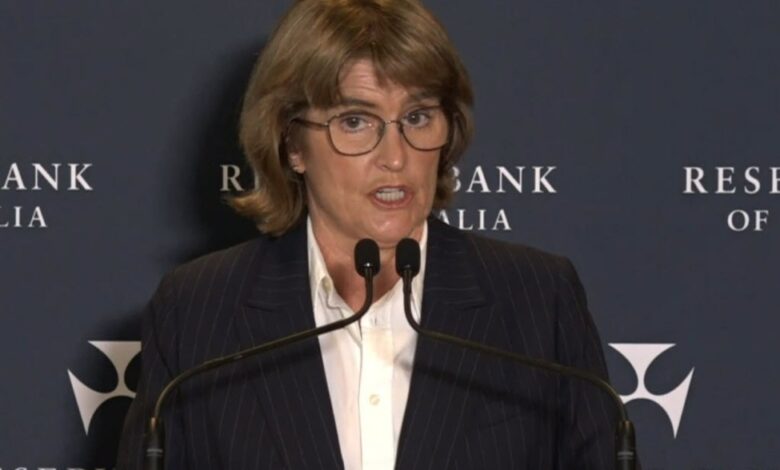
I suspect the Reserve Bank of Australia today will the first of many to give the BIS the middle finger:
—
Explainer: what the BIS is and why it matters
The Bank for International Settlements, based in Basel, Switzerland, is often described as the “central bank for central banks.” Founded in 1930, the institution provides research, policy coordination and financial services to more than 60 central banks around the world.
While the BIS does not set monetary policy itself, its research and warnings are closely followed because they often highlight systemic risks in the global financial system. Many major central bank officials, including Federal Reserve and ECB policymakers, regularly participate in BIS committees and discussions.
As a result, BIS commentary can influence how markets interpret broader central-bank thinking, particularly on issues such as financial stability, inflation dynamics and global liquidity.