DeFi lending platform Aave sees $27 million liquidations after wstETH price glitch


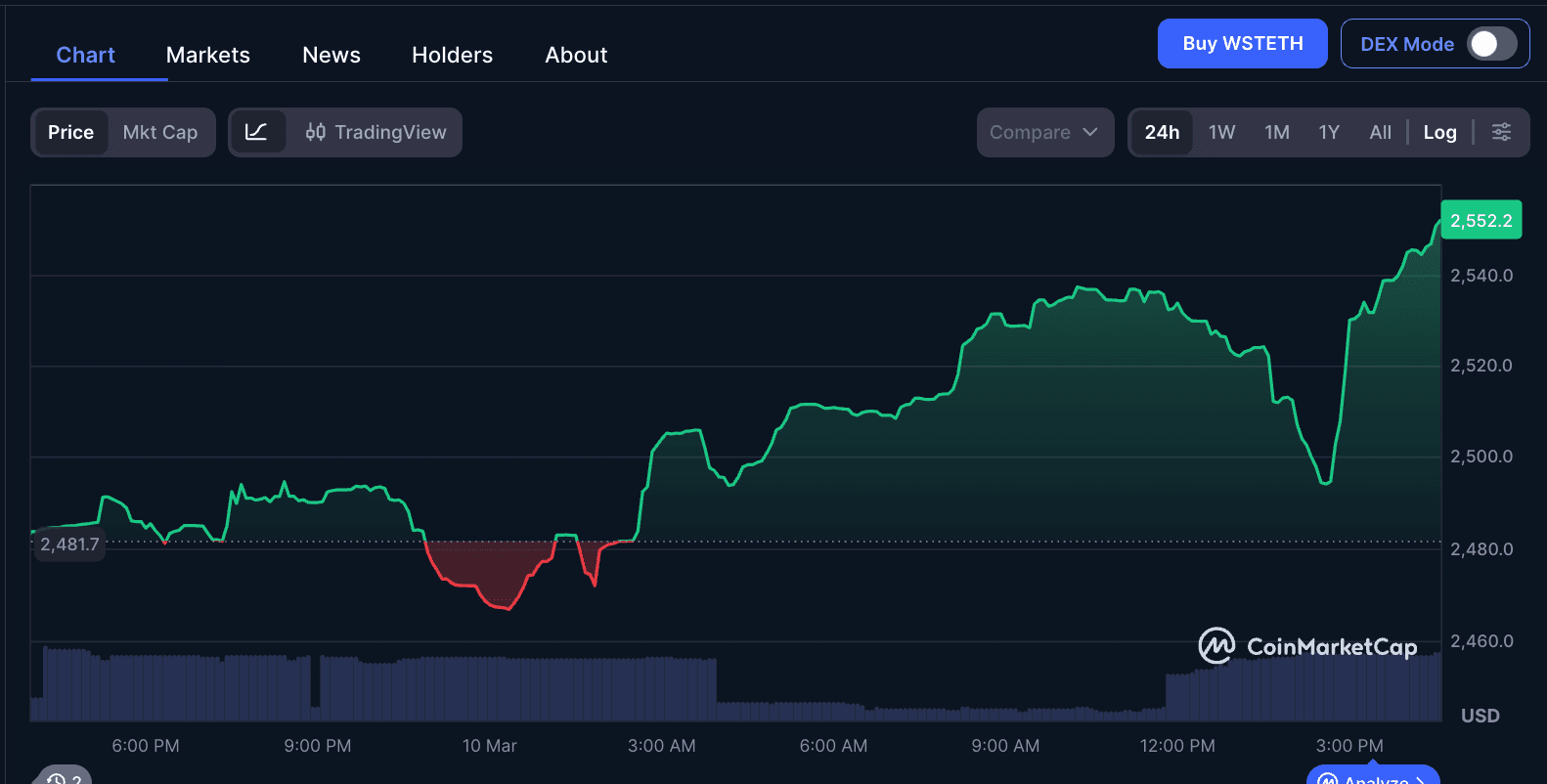
About $27 million was liquidated on the decentralized lending platform Aave over the last 24 hours, in what some market participants say may have been caused by a temporary pricing issue involving the token wstETH.
Blockchain data flagged by risk-management firm Chaos Labs shows a spike in liquidations in the past 24 hours. Some observers believe the event may have been linked to a price update in an oracle system that Aave uses to determine the value of collateral.
Oracles are services that feed price data from the outside world into blockchain applications. Lending protocols like Aave rely on them to decide when a borrower’s collateral is no longer sufficient to back their loan — at which point the position can be liquidated.
While such scenarios are rare, most recently, a price-oracle setup misconfigured by DeFi lender Moonwell briefly valued Coinbase Wrapped ETH (cbETH) at about $1 instead of roughly $2,200, leaving the protocol with nearly $1.8 million in bad debt.
In Aave’s case, some say the issue may have involved wstETH, a token issued by Lido that represents staked ether. Because it accrues staking rewards over time, one wstETH is typically worth slightly more than one ETH.
According to a post from LTV Protocol on X, at the time of the liquidations, Aave’s oracle appeared to value wstETH at roughly 1.19 ETH, while the broader market valued it closer to 1.23 ETH.
Volume remained relatively low for wstETH trading pairs, with just $10 million being traded over the past 24 hours, so it is unlikely any astute traders capitalized on the pricing mismatch before it snapped back.
Aave spokesperson didn’t reply to CoinDesk’s request for comments.
Earlier in the day, risk firm LlamaRisk briefly published a post on the AAVE forum, attributing the liquidations to an issue with Chaos Labs’ risk oracle, before deleting it.
Chaos Labs later said the underlying oracle itself reported the correct market values, and that the liquidations were instead triggered by a configuration issue in the protocol’s CAPO risk oracle, which is designed to place limits on how quickly the value of yield-bearing tokens such as wstETH can increase.
According to Chaos Labs, the incident was caused by a mismatch between stale parameters stored in a smart contract, including a reference exchange rate and its associated timestamp. Because those values were not updated in sync, the CAPO system temporarily calculated a maximum allowed exchange rate that was lower than the real market value of wstETH.
That effectively caused the protocol to treat wstETH as about 2.85% less valuable than it actually was, pushing some borrowing positions below their safety thresholds, triggering liquidations.
Chaos Labs said the protocol incurred no bad debt, though liquidators — traders or bots that repay risky loans in exchange for discounted collateral — captured roughly 499 ETH in liquidation bonuses and profits from the temporary price discrepancy.
A Lido contributor told CoinDesk, “We are aware of the liquidations due to an incorrect wstETH to USD price reported by this oracle mechanism. The cause has nothing to do with wstETH itself, how it works or the Lido protocol which continue to operate normally.”
Oliver Knight contributed reporting to this story.
Read more: Aave governance rift deepens as major governance group exits $26 billion DeFi protocol