investingLive Americas FX news wrap 4 Mar: Markets ignoring geopolitical risks. Data beat.


2026-03-04 21:18:00
Geopolitical risks remain elevated, with headlines coming fast and furious. Despite the steady flow of developments, markets appear content to look through the noise for now, suggesting investors see the situation as contained. The U.S. and Israel have generally held the upper hand, though that doesn’t mean occasional counterpunches or flare-ups won’t occur, keeping a layer of uncertainty in the background.
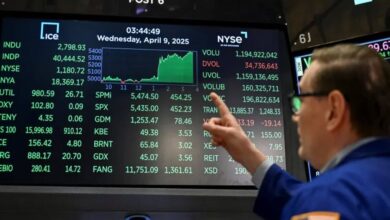
For today, however, risk sentiment improved, helping equities move higher. In the U.S., the NASDAQ gained about 1.4%, while the S&P 500 rose nearly 1%. European markets performed even better, led by the German DAX (+1.74%), Spain’s IBEX (+2.49%), and Italy’s FTSE MIB (+1.95%).
In the U.S. debt market, yields moved back higher after yesterday’s decline. The 2-year yield rose 4.3 basis points to 3.543%, while the 10-year yield increased 2.9 basis points to 4.089%, reflecting a modest shift back toward risk-taking in financial markets.
Yields were helped by better-than-expected ADP employment data ahead of the jobs report on Friday, and stronger ISM data.
The ADP employment report for February showed private payrolls rising by 63,000, beating expectations of 50,000 and improving from a revised gain of 11,000 in January. The increase was driven primarily by the services sector, which added 47,000 jobs, while goods-producing industries contributed 16,000. Hiring was strongest among small businesses, which added 60,000 jobs, while large firms added 10,000 and medium-sized companies shed 7,000 positions.
Wage growth was steady but not accelerating, with pay for job stayers rising 4.5% year-over-year, unchanged from the prior month, while wage gains for job changers eased slightly to 6.3% from 6.4%. Overall, the report suggests the labor market continues to improve gradually, supporting expectations that the upcoming official nonfarm payrolls report could also show solid job growth, even as wage pressures remain relatively stable.
The ISM Non-Manufacturing PMI for February rose to 56.1, well above the 53.5 estimate and up from 53.8 in January, marking the 20th straight month of expansion and the highest level since July 2022. The strength was driven by gains in business activity (59.9) and new orders (58.6), while the employment index improved to 51.8, signaling modest job growth in the services sector.
Price pressures eased slightly but remain elevated, with the prices paid index falling to 63.0 from 66.6. Meanwhile, backlogs, export orders, and imports all jumped, indicating stronger demand and improving global activity. Overall, the report points to a heating up U.S. services sector with solid demand and persistent inflation pressures
Later in the day, the Federal Reserve released the Beige Book – an anecdotal look at the economy ahead of the March meeting on March 18. The Beige Book reported that economic activity increased at a slight to moderate pace across most districts, with 7 of the 12 regions seeing growth, while 5 districts reported flat or declining conditions. Consumer spending rose slightly overall, though some areas saw declines due to economic uncertainty, greater price sensitivity, and weaker spending from lower-income households. Manufacturing activity improved, supported by demand tied to data centers and energy infrastructure, while transportation activity was mixed. The housing sector remained soft, with residential construction and sales constrained by low inventories and affordability challenges, while energy activity increased modestly and financial services showed stable to slightly stronger conditions. Overall, most districts maintained a cautiously optimistic outlook, expecting modest growth ahead.
Labor market conditions were generally stable, with most districts reporting little change in hiring as firms remained cautious amid uncertainty and higher costs. Wage growth continued at a modest to moderate pace, particularly for skilled positions, though overall compensation pressures persisted due to rising benefits costs such as health insurance. On inflation, prices increased at a moderate pace, driven largely by higher non-labor input costs including insurance, energy, utilities, and raw materials. Tariffs were cited widely as a factor pushing costs higher, though some firms noted they were absorbing part of those increases due to growing consumer price sensitivity, with many expecting price growth to moderate somewhat in the coming months.
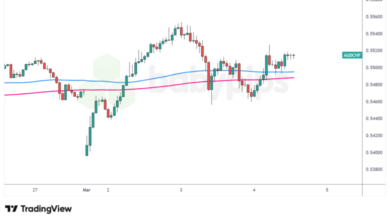
In the FX market, the flight into the safety of the U.S. dollar seen during the first two days of the week reversed today, with the dollar index falling 0.31% as risk sentiment improved. The biggest beneficiaries were the commodity currencies, with the NZD rising 0.88% and the AUD gaining 0.65%. Both pairs are trading near key hourly moving averages heading into the close, levels that could help determine the next directional bias.
The dollar also moved lower against most of the other major currencies. The USD fell 0.41% versus the JPY, 0.33% against the CHF, 0.28% versus the CAD, 0.23% against the EUR, and 0.16% versus the GBP.
In commodities, crude oil traded on both sides of unchanged, with prices ranging from a low of $73.28 to a high of $77.23. After settling at $74.81 yesterday, oil is currently trading near $75.22, up about 0.57%. Precious metals also rebounded after sharp losses the prior day. Gold, which fell 4.38% yesterday, is up 0.96% today, while silver is higher by about 1.4% after tumbling more than 8% in the previous session.
Bitcoin was a notable beneficiary of the improved risk tone, rallying nearly $5,000 or 7.16% to around $73,230. The cryptocurrency traded in a wide range during the session, reaching a low of $67,405 and a high of $74,075 before settling near current levels.
For a technical look at the price of Bitcoin, click here.