Bitcoin surges past $71,000 in Asia trading session during record South Korean stock market crash of 18% this week



The South Korean stock market (KOSPI) closed near 5,094 after falling 12.06% in a single session today.
The index had already fallen 7.24% the prior session, taking the two-day slide to roughly 18.4% on a compounded basis. South Korean equities did not fall alone, but the magnitude set Korea apart in a global risk-off window.
However, Bitcoin moved higher during Asian hours to just below $72,000 for the first time since Feb. 8, proving that correlations can break hardest on the days when investors most expect them to hold.
Given Bitcoin’s decline during APAC trading hours on Monday, seeing BTC surge today, while South Korean equities tumble, was unexpected.
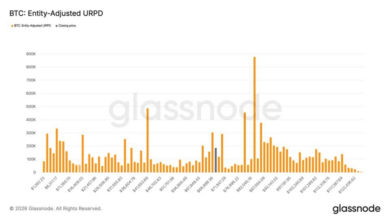
In recent weeks, Bitcoin has mostly traded inside a broad $60,000–$70,000 band. Glassnode argued that the range itself had become part of the market structure, as traders respond to ETF flow trends and derivatives exposure rather than to macro developments alone.
The divergence between Korea’s benchmark and Bitcoin puts numbers behind the question, “When an Asia-first shock hits oil, foreign exchange, and equity leverage at once, which markets become the funding source, and which markets become the release valve?
The KOSPI move was the largest one-day drop since 2008. A sudden repricing of imported energy risk, pressure on the won, and forced de-risking in a market with concentrated exposures.
| Metric | Verified figure | Source link |
|---|---|---|
| KOSPI close (Mar. 4, 2026) | ~5,094 | KOSPI |
| KOSPI one-day move (Mar. 4, 2026) | -12.06% | close |
| KOSPI prior day move (Mar. 3, 2026) | -7.24% | daily |
| Two-day compounded move (Mar. 3–4, 2026) | ~ -18.4% | changes |
| Won stress level cited in reports | ~1,500 per USD | won |
| Brent level cited in reports | ~$83 | Brent |
| South Korea crude import exposure | ~2.6M b/d; >60% from Middle East | imports |
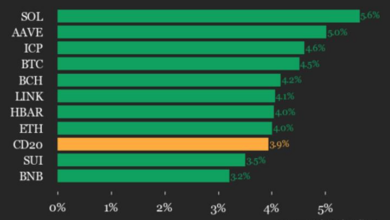
| Crypto fund flow pulse (weekly) | -$288M total; -$215M BTC | outflows |
| BTC range referenced by on-chain commentary | $60,000–$70,000 | range |
Korea repriced energy and FX risk in a market built on concentration
Korea’s selloff was a stress test of a specific macro profile. The country is a major energy importer, and official energy data show it has imported just under 2.6 million barrels per day of crude, with more than 60% sourced from the Middle East.
Those EIA figures make the sensitivity concrete: a shipping disruption does not need to shut off barrels to raise the risk premium across freight, insurance, and near-term supply contracts, and that premium can filter into inflation expectations quickly in an import-heavy economy.
The drop is tied to conflict-driven oil-disruption fears around Iran and to currency pressure that compounded the equity drawdown. The won also briefly weakened toward 1,500 per U.S. dollar. That FX pressure matters in practice because it changes the cost of energy imports in local terms and can force asset managers with currency hedges to rebalance. When the equity index is already extended from a strong run, those rebalances can turn into forced selling.
The next question for investors is whether oil and FX volatility remain elevated long enough to reset the market’s pricing of earnings risk, even if the underlying semiconductor export cycle stays firm.
The KOSPI entered March after a steep year-to-date climb in many accounts of the rally, and concentration tends to magnify both the rise and the fall when a handful of large companies dominate index weights.
That index concentration also changes the unwind: investors who use Korea as a liquid proxy for global tech exposure do not need a fundamental view on every sector to sell the benchmark.
Using back-of-envelope math, we can first look at Korea’s import volumes and a GDP reference of about $1.917 trillion.
That GDP base implies that a sustained $ 10-per-barrel increase amounts to roughly $9.5 billion in additional gross import costs per year, around 0.5% of GDP.
A $30 increase implies roughly $28.5 billion, around 1.5% of GDP.
That’s not a one-for-one hit to growth or corporate earnings, because it ignores offsets and pass-through dynamics, but it does describe the size of the shock investors were asked to price in within a few sessions.
In tandem, the macro backdrop shows export strength, including a 29% year-over-year jump in February and record semiconductor exports. Export data sits alongside a second datapoint cited in local coverage: a record annual current account surplus of about $123 billion in 2025. That surplus provides a macro cushion over time, but the market can still demand a higher risk premium while geopolitical conditions keep oil and shipping uncertainty elevated.
As the selloff accelerated, the market experienced trading halts and circuit breakers as liquidity conditions tightened in Korea. Those halts matter for what comes next because liquidity is the hinge for the next phase.
If policymakers and market structure prevent a disorderly spiral, a technical rebound becomes plausible. If the won weakens again while oil risk stays elevated, foreign selling can persist even if local buyers step in.
Bitcoin’s move should be read through flows, positioning, and the $60,000–$70,000 band
Bitcoin’s relative strength during Asia hours sits on a different set of mechanics than Korea’s equity plunge. Recently, BTC price has been range-bound between $60,000 and $70,000, with thin conviction outside those levels and derivatives positioning that could amplify the next break.
Glassnode framed the market as defensive rather than euphoric, pointing to conditions in which spot demand does not need to surge for price to move sharply. A shift in gamma exposure or a funding reset can do the work.
If investors reduce risk in equities, they may also reduce leverage in crypto, which would normally put pressure on prices. But if selling is already exhausted, or if traders hold short positions around a well-watched range high, the unwind can still push bitcoin up. The cleaner interpretation is microstructure, price can move because positioning changes faster than spot flows.
The Korea shock also introduces a regional lens crypto traders tend to watch closely: local currency stress can change crypto demand at the margin. When the won weakens, Bitcoin priced in won can rise even if dollar Bitcoin stays flat, and that can pull local activity forward.
The mechanism is straightforward: a weaker local currency can shift the timing of retail conversion into dollar-priced assets, and crypto is one of the fastest rails available.
Bitcoin and Korea’s equity benchmark also differ in that Bitcoin does not embed the same direct sensitivity to oil in corporate earnings.
Korea’s listed firms face margins, shipping costs, and currency translation, and the index bundles those exposures. Bitcoin reacts to liquidity, interest rate expectations, and risk appetite, but it can also reflect an investor’s preference for assets not tied to a single country’s energy balance sheet. That preference is inconsistent over time.
On some days, Bitcoin trades like a high-beta tech instrument. On other days, it behaves like a volatility product, responding to its own market plumbing.
The next move depends less on narrative and more on observable market signals that traders can measure without interpretation:
- Whether price holds above the middle of the $60,000–$70,000 band.
- Whether weekly fund flow reports return to sustained outflows or continue to reverse.
- Whether broader risk markets keep tightening financial conditions, which tends to raise the cost of leverage across assets.
A single Asia session does not rewrite Bitcoin’s correlation history, but it can reveal which levers are currently in control.
What traders will test next: de-escalation, protracted risk premium, or renewed stress
The next several weeks are likely to be defined by whether the oil shock fades into the background or embeds itself into prices. Brent was priced around $83 during the selloff.
The oil level alone is less important than the risk premium attached to it. The EIA’s short-term outlook has also described a 2026 baseline that expects lower average Brent prices, even if near-term events can overwhelm that view. That forecast gap sets the stage for scenario work.
Scenario 1: Oil risk premium fades, and the won stabilizes. In this case, Korea’s two-day drawdown reads primarily as a leverage and positioning unwind layered on top of strong fundamentals. Export strength and the 2025 current account surplus support the macro picture, and lower perceived shipping risk eases inflation anxiety.
The account balance does not eliminate volatility, but it can reduce the duration of stress. For Bitcoin, a calmer macro backdrop shifts focus back to flows and market structure: the $60,000–$70,000 range becomes the primary battleground, and the question becomes whether demand replaces the derivatives-driven bounce described by on-chain commentary. That structure call is testable, price can hold and climb only if the next leg is supported by steadier inflows.
Scenario 2: Oil stays elevated and FX remains volatile. This scenario keeps Korea on the front line because of the scale of its crude import exposure. The earlier math is a guide: a $10 sustained oil rise implies about $9.5 billion in additional annual gross import costs, and a $30 rise implies about $28.5 billion.
Those costs do not need to fully hit earnings to affect pricing; investors only need to believe in the pass-through, and policy responses will increase uncertainty. In crypto, persistent macro volatility can support intermittent Bitcoin demand,
Scenario 3: Renewed stress forces broader deleveraging. If liquidity tightens further across markets, correlations can rise again, and Bitcoin can become part of the funding stack instead of an alternative. Korea’s experience with halts and rapid declines shows how quickly liquidity can evaporate when selling accelerates.
That liquidity warning translates directly to crypto when leveraged market participants need to raise cash. In that environment, traders will watch whether bitcoin behaves as a hedge in local-currency terms and, at the same time, whether global deleveraging pressure turns it into a source of liquidity.
A market pinned between $60,000 and $70,000 can gap through levels when forced flows appear.
For Korea, traders will watch Brent and the won, and whether policy signals aim to restore market function after the historic drop.
The policy response will also shape whether foreign selling persists. For Bitcoin, traders will watch whether reported fund flows continue to bleed and whether price action respects the range.
The divergence is stark. Korea repriced oil-and-FX risk in a single move, while Bitcoin traded to a different rhythm.
The next test is whether that rhythm holds once the market digests the simplest numbers on the screen: Brent near the low $80s, a won that flirted with 1,500 per dollar, and a crypto flow picture that still showed net outflows in late February.