


Key takeaways:
Ether dropped 28% in a week to $2,110 as investors cut risk and markets wiped out leveraged traders.
Spot ETH ETF outflows reached $447 million as Ethereum network activity fell by 47%.
Ether (ETH) plummeted to $2,110 on Tuesday, signaling fragility following a brutal 28% price correction over seven days. Investors retreated into cash and short-term government bonds as the tech-heavy Nasdaq Index also fell 1.4%.
Traders worry that valuations have become overextended and overly reliant on the artificial intelligence sector. Sentiment soured after Nvidia (NVDA US) CEO Jensen Huang denied plans to invest $100 billion in OpenAI.
Investors braced for additional volatility following disappointing quarterly results from fintech giant Paypal (PYPL US). Meanwhile, gold prices climbed 6%, and silver gained 9%, suggesting a lack of confidence in the US Federal Reserve’s ability to prevent a recession.
Concerns over inflated stock market valuations prompted traders to become increasingly risk-averse, causing demand for bullish leveraged ETH positions to evaporate.
The ETH perpetual futures annualized funding rate turned negative on Tuesday, indicating that shorts (sellers) are paying fees to maintain their positions. This rare shift reflects a profound lack of confidence from longs (buyers).
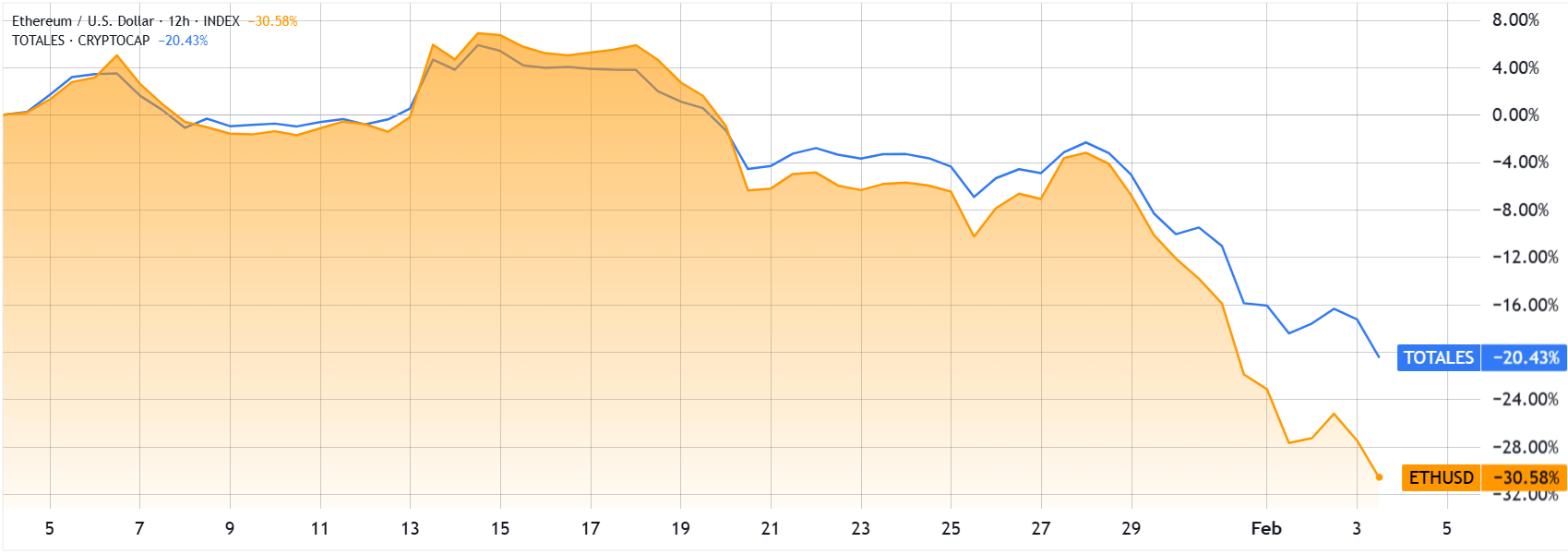
Market participants are now debating whether this extreme fear presents a strategic entry point, especially since ETH has underperformed the broader cryptocurrency market by 10% over the last 30 days.
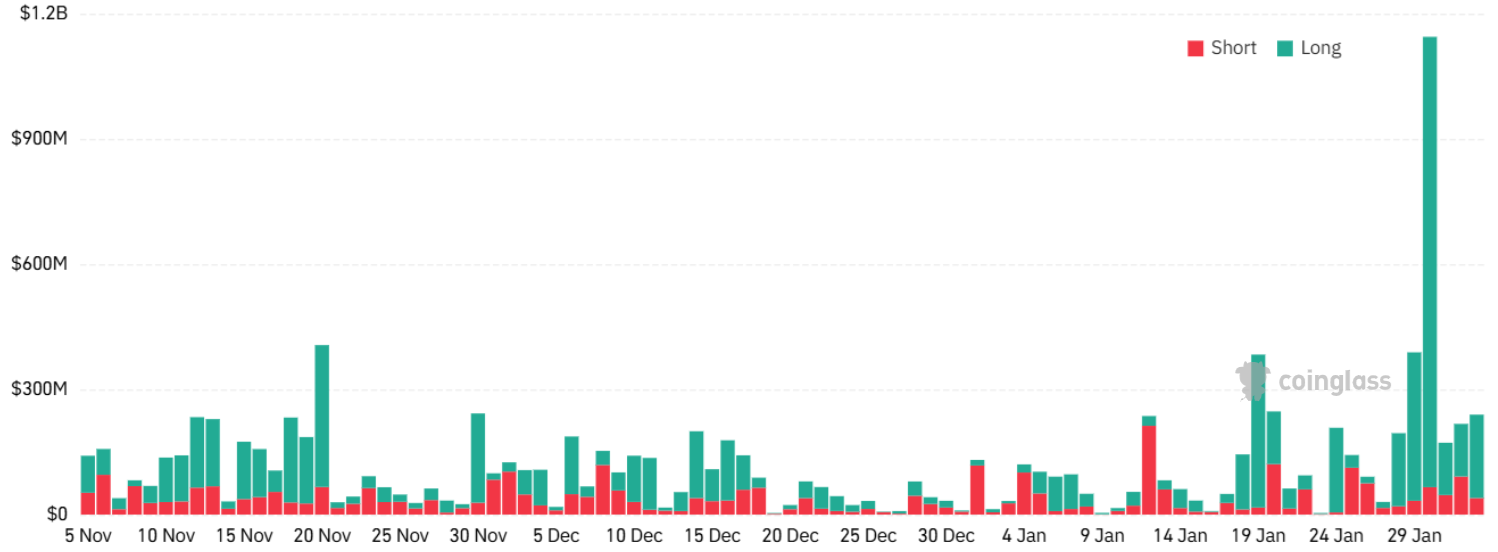
Ether investors grew uneasy as other major cryptocurrencies weathered less severe corrections over the past month; Bitcoin (BTC) dropped 17%, BNB (BNB) fell 14%, and Tron (TRX) declined 4%. Ether’s weekly slide to $2,110 forced the liquidation of over $2 billion in leveraged bullish ETH futures, fueling concerns of further downside as market sentiment turns bearish.
Ether pressured as exchange-traded funds outflows signal cooling demand
Ether price was further burdened by $447 million in net outflows from US-listed Ethereum spot exchange-traded funds (ETFs) over five days. Institutional demand has cooled, despite continued accumulation from firms like Bitmine Immersion (BMNR US), Sharplink (SBET US), and The Ether Machine (ETHM US). Traders remain wary of potential sell pressure stemming from the $14.4 billion held in aggregate Ethereum ETFs.
As interest in decentralized applications (dApps) waned, the appetite for ETH diminished significantly.
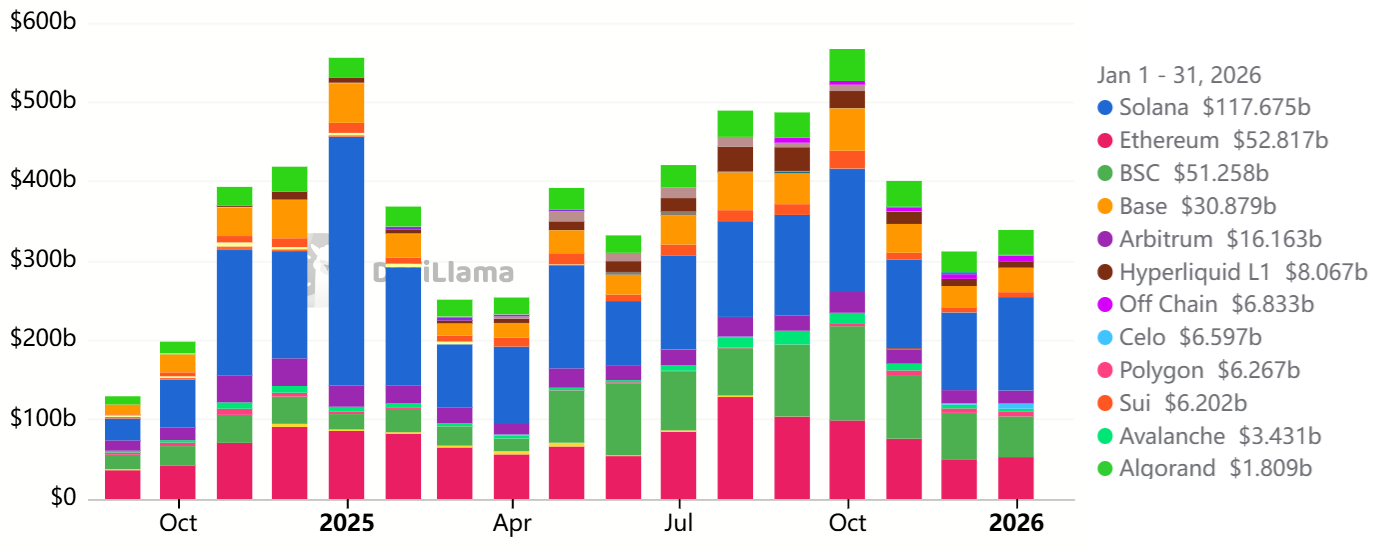
Trading volumes on Ethereum decentralized exchanges (DEX) reached $52.8 billion in January, a sharp drop from $98.9 billion in October 2025. This 47% decline in activity reduces incentives for holders; typically, high demand for blockchain processing triggers the network’s burn mechanism, which shrinks the total ETH supply.
Related: Spot crypto volumes plunge to 2024 lows amid investor demand weakens
Addresses linked to Ethereum co-founder Vitalik Buterin sold approximately $2.3 million in ETH after earmarking $45 million for donations toward privacy technologies, open hardware, and secure software. Buterin said that a total of 16,384 ETH from his personal holdings will be gradually deployed over the coming years.
The current lack of demand for bullish ETH perpetual futures should not be viewed as a signal for a quick reversal. Onchain metrics continue to weaken, and overall sentiment remains cautious given the prevailing macroeconomic uncertainty.
This article does not contain investment advice or recommendations. Every investment and trading move involves risk, and readers should conduct their own research when making a decision. While we strive to provide accurate and timely information, Cointelegraph does not guarantee the accuracy, completeness, or reliability of any information in this article. This article may contain forward-looking statements that are subject to risks and uncertainties. Cointelegraph will not be liable for any loss or damage arising from your reliance on this information.