China Pres Xi revive push for yuan as reserve currency amid global dollar dominance debate

2026-02-01 21:28:00
China is doubling down on its long-term push to internationalise the yuan, but structural and policy constraints still limit its reserve-currency appeal.
Summary:
-
President Xi Jinping, in an article published on Saturday in Qiushi, the Communist Party’s leading theoretical journal, has renewed calls for the yuan to evolve into a global reserve currency, underscoring Beijing’s long-term ambition to reduce reliance on the US dollar.
-
Said China must build a “strong currency” that can be widely used in international trade, investment and foreign exchange markets, and eventually achieve global reserve status.
-
China is expanding infrastructure to support yuan usage, including trade settlement, currency swaps, and alternative payment systems.
-
Progress on internationalisation remains uneven, with capital controls and policy caution limiting the yuan’s reserve appeal.
-
Cooperation with Russia and BRICS partners is accelerating, but structural and geopolitical hurdles remain significant.
-
Markets see the yuan as undervalued, though authorities remain wary of rapid appreciation or destabilising inflows.
China is sharpening its long-standing ambition to elevate the renminbi to global reserve currency status, with President Xi Jinping calling for the development of a “strong currency” capable of broader international use. The renewed emphasis highlights Beijing’s strategic objective of reducing dependence on the US dollar while strengthening China’s financial influence globally.
China has made steady progress in expanding the yuan’s footprint in trade settlement, with close to one-third of its foreign trade now conducted in local currency. This shift reflects both policy encouragement and geopolitical realities, particularly as trade and financial frictions with the United States persist. While Xi did not directly reference the dollar, the broader direction of policy leaves little doubt that China aims to create credible alternatives to dollar-based financial infrastructure.
At the core of this push is a recognition that China’s financial system, while vast, still lacks depth and resilience compared with established reserve-currency issuers. Despite holding one of the world’s largest banking systems, foreign exchange reserves, and capital markets, policymakers acknowledge that scale alone does not equate to global trust or dominance. Building a genuine financial powerhouse, Chinese officials concede, will require years of institutional development.
Beijing has intensified efforts on several fronts. The Cross-Border Interbank Payment System has been expanded as a parallel settlement mechanism to SWIFT, particularly in transactions involving Russia. Energy trade between the two countries is increasingly settled in yuan, reinforcing bilateral momentum while insulating flows from sanctions risk. Beyond Russia, China has signed currency swap agreements with roughly 50 economies, providing liquidity backstops that facilitate local-currency trade and financial cooperation.
China is also working through multilateral channels. Within the expanded BRICS grouping, discussions continue around alternative payment systems and, longer term, the concept of a shared settlement currency. These initiatives are framed as diversification efforts rather than outright challenges, though they have drawn sharp warnings from Washington.
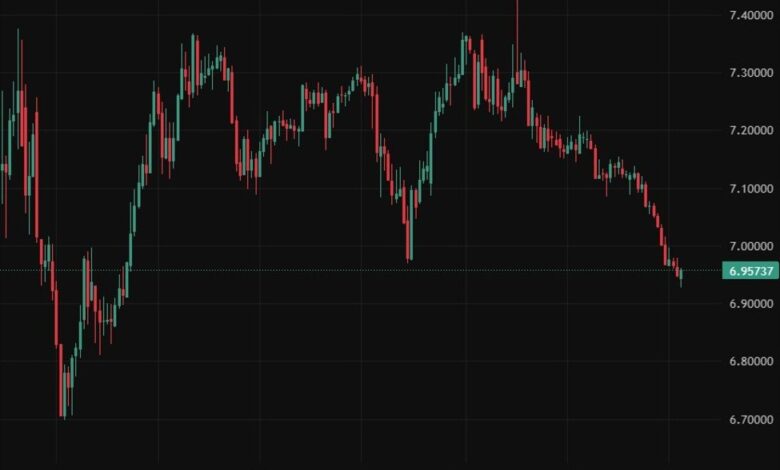
From a market perspective, the yuan’s international role remains constrained. Capital controls, limited convertibility, and policy-driven exchange rate management continue to limit its attractiveness as a reserve asset. While the currency has strengthened over the past year and is widely viewed as undervalued on long-term metrics, authorities remain cautious about allowing sharp appreciation that could disrupt exports or financial stability.
Taken together, China’s strategy reflects persistence rather than urgency. The path to reserve currency status is likely to be gradual, shaped as much by institutional reform and global confidence as by geopolitical ambition.