
2026-01-29 23:14:00
Summary:
-
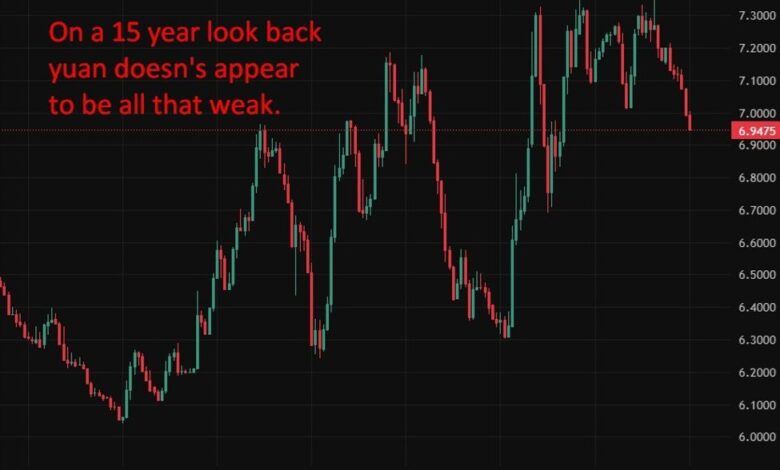
The US Treasury said the Chinese yuan is “substantially undervalued” and called for a timely, orderly appreciation.
-
Treasury again stopped short of naming any country a currency manipulator.
-
China’s large and rising external surpluses were cited as a key concern.
-
Thailand was added to the Treasury’s FX monitoring list.
-
Goldman Sachs and the IMF both flagged currency undervaluation as a factor behind China’s export strength.
The U.S. Treasury stepped up pressure on Beijing in its latest semiannual foreign exchange report, arguing that the Chinese yuan remains materially undervalued and calling on authorities to allow the currency to strengthen in a timely and orderly manner.
Treasury said China’s exchange-rate stance is increasingly inconsistent with its large and growing external surpluses, warning that persistent currency misalignment risks distorting global trade flows and weighing on rebalancing efforts in the world economy. The report framed yuan appreciation as a necessary adjustment to reflect underlying fundamentals, particularly given China’s continued export strength and subdued domestic demand.
Despite the firmer language, Treasury again stopped short of formally designating any trading partner a currency manipulator — a move that would trigger enhanced consultations and potentially escalate trade tensions. Instead, it maintained enhanced monitoring of several major economies, including China, Japan, South Korea, Taiwan, Singapore, Vietnam, Germany, Ireland, and Switzerland, while adding Thailand to the monitoring list.
Treasury’s assessment aligns with recent analysis from major financial institutions. Goldman Sachs Group Inc. estimated late last year that the yuan is around 25% undervalued on a real effective basis, while the International Monetary Fund has linked part of China’s export resilience to currency depreciation and weak domestic consumption.
The report lands at a sensitive juncture for markets, with currency policy increasingly intersecting with trade relations, geopolitical competition and domestic political considerations in the United States. While Treasury avoided formal escalation for now, the sharper tone underscores continued frustration with China’s FX framework and signals that exchange-rate policy will remain a central issue in bilateral economic discussions.
For investors, the language raises the risk of renewed FX tension, particularly if Washington steps up pressure ahead of future trade or industrial-policy negotiations. While immediate policy action appears unlikely, Treasury’s stance keeps scrutiny firmly on USD/CNY dynamics and broader Asia FX spillovers in the months ahead.