

The world breathed a small, collective sigh of relief on Wednesday when US President Donald Trump said he would not use force to take over Greenland during a rambling, hour-long speech to a crowd of world leaders in Davos.
Trump argued why the US should rightly own Greenland, ostensibly as a bulwark against Russian or Chinese influence in the region. However, he walked back some worrying rhetoric about military action, stating that he would not use force to take over Greenland, which itself is an autonomous region of Denmark. He scrapped plans to use tariffs to pressure allies to go along with his acquisition plans.
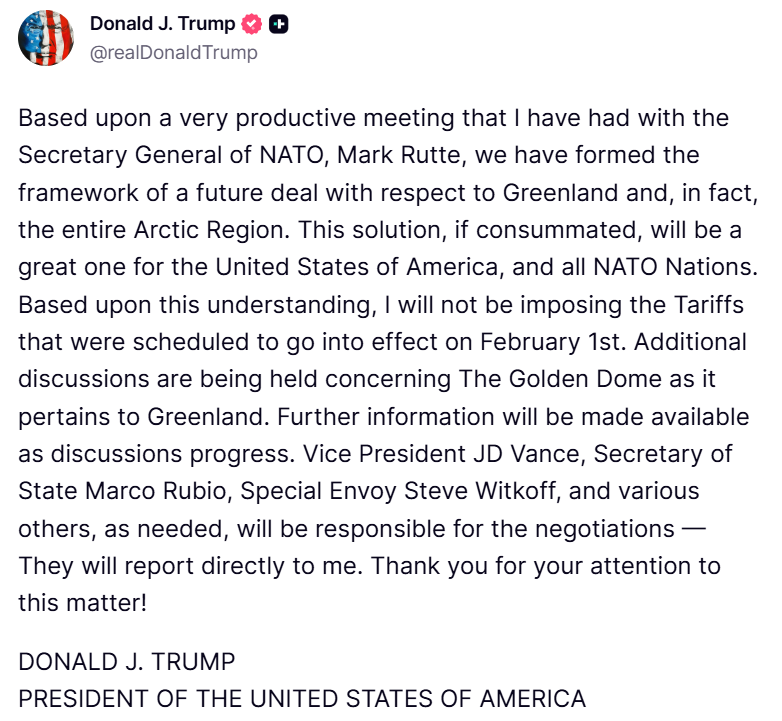
Indeed, he walked away from Davos with a supposed “framework of a future deal.” Bitcoin (BTC) responded positively to the news, bumping up from around $87,000 to $90,000 as the evening came to a close.
Amid the geopolitical tensions that have been escalating over the last month, some analysts increasingly note the effect it has on Bitcoin’s price.
Trump’s Greenland plans show Bitcoin is very much risk-on
Since the beginning of the year, the White House ramped up threats of taking over Greenland. Doing this by force would essentially be declaring war on Denmark, a fellow NATO member.
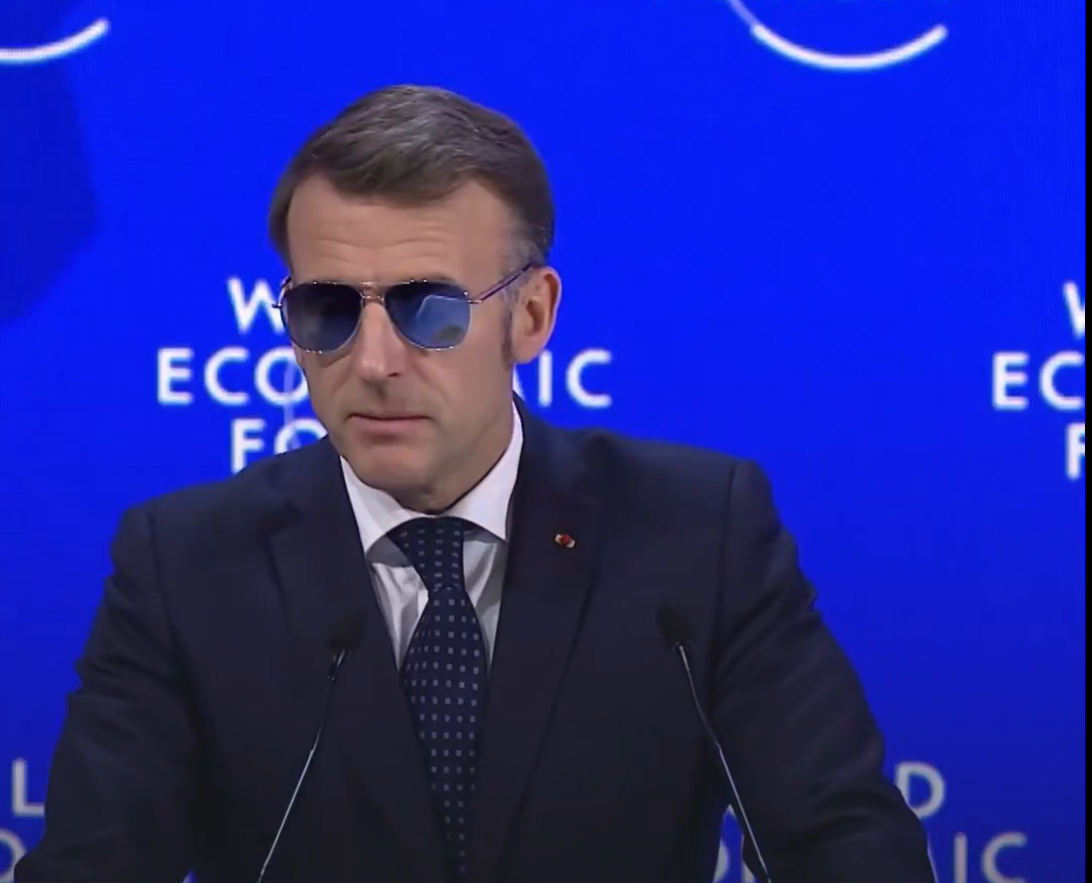
Trump further threatened additional 25% tariffs on countries that opposed his plans to acquire Greenland. In personal messages Trump later published to social media, French President Emmanuel Macron said, “I do not understand what you are doing on Greenland.”
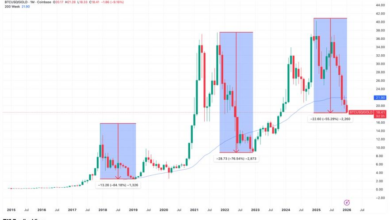
Bitcoin’s price didn’t either. It sank from around $110,000 at the beginning of November 2025 to below $90,000 by Nov. 21. Since then, it has struggled to break $90,000. In the last week, Bitcoin fell from $96,000 to $88,000.
Chris Beauchamp, chief market analyst at investing and trading platform IG, wrote in a newsletter on Jan. 19, “Cryptocurrencies offered no haven from the wave of selling that washed over global markets in response to Trump’s threat.”
He said that “Bitcoin’s run at $100K was stopped in its tracks last week, and while the $90,000 level has yet to be tested it looks like the recovery is on pause for now.” The Greenland situation added to “what was an already busy week,” with major crypto exchange Coinbase withdrawing its support from a crypto framework bill.
Related: US crypto market structure bill in limbo as industry pulls support
“Markets are waiting to see if the EU goes for a tough response that may simply escalate the situation, or opts for a back-channel approach,” he said.
It seems that cooler heads have prevailed, at least for now. Trump noted the framework for a partnership in a Truth Social post yesterday:
Danish Foreign Minister Lars Løkke Rasmussen wrote on X, “The day is ending on a better note than it began. We welcome that POTUS has ruled out to take Greenland by force and paused the trade war. Now, let’s sit down and find out how we can address the American security concerns in the Arctic while respecting the red lines of the [Kingdom of Denmark].”
But Nigel Green, CEO of deVere Group, said that, for markets, “a negotiated pause could limit immediate disruption, but uncertainty would persist because leverage has been established.”
“Transatlantic trade underpins confidence across global supply chains. Disruption there feeds into investment decisions, currency stability, and diplomatic alignment worldwide.”
Greenland and global markets, including Bitcoin, may not be out of the woods yet.
Tariffs, the “trade bazooka” and big deals on pause
Certain trade agreements have already been cancelled as a result of the belligerent rhetoric coming from Washington. On Jan. 21, the European Parliament cancelled a trade deal that had been in the works since July.
The agreement, dubbed the “Turnberry proposals,” would bring down US tariffs on most European goods from 30% to 15%, which were part of Trump’s sweeping “Liberation Day” tariffs. In exchange, the EU agreed to invest in the US and make an effort to increase US imports.
On Wednesday, Bernd Lange, chair of the European Parliament’s International Trade Committee, said, “We have been left with no alternative but to suspend work on the two Turnberry legislative proposals until the U.S. decides to re-engage on a path of cooperation rather than confrontation, and before any further steps are taken.”
Ahead of Davos, Macron had suggested that Europe could respond to American aggression with the “trade bazooka,” a moniker for the EU’s Anti-Coercion Instrument (ACI). The law would take six months for the EU to activate but would effectively shut off European markets from the US. This, in turn, could cost American companies billions of dollars in losses.
Trump may have suspended tariffs for now, but his administration’s policy on the same has been notoriously capricious since the beginning of his second term.
Related: Risk-on assets? Trump tariffs lead to mass Bitcoin, crypto liquidations
A reescalation of a US-EU trade war could prove a powerful headwind for Bitcoin, as it has previously. On Wednesday, Cory Klippsten, CEO of Bitcoin financial services firm Swan, said, “The biggest drag on Bitcoin price the past year has been tariffs […] That’s the drag on risk assets in general, and in particular [with] Bitcoin, there’s just uncertainty around what’s gonna happen.”
“If you had Trump being pro-Bitcoin and even just running all the grifts, and emoluments and self-enrichment on the crypto side, but absent tariffs, I still think you would have had a ripping Bitcoin price run in 2025.”
Market analyst Kshitiz Kapoor wrote at the end of last year that “macro pressure, tariffs, tightening liquidity, and shifting risk sentiment pulled price back. By year-end, Bitcoin never came close to those targets.”
“Lesson: Markets don’t move on conviction alone. They move on liquidity, positioning, and macro.”
Bitcoin has seen increased adoption in several countries over the last year. But as it’s become more accepted in the global financial system, it’s also become more susceptible to the geopolitical factors that influence that system.
Magazine: ‘If you want to be great, make enemies’: Solana economist Max Resnick
Cointelegraph Features and Cointelegraph Magazine publish long-form journalism, analysis and narrative reporting produced by Cointelegraph’s in-house editorial team and selected external contributors with subject-matter expertise. All articles are edited and reviewed by Cointelegraph editors in line with our editorial standards. Contributions from external writers are commissioned for their experience, research or perspective and do not reflect the views of Cointelegraph as a company unless explicitly stated. Content published in Features and Magazine does not constitute financial, legal or investment advice. Readers should conduct their own research and consult qualified professionals where appropriate. Cointelegraph maintains full editorial independence. The selection, commissioning and publication of Features and Magazine content are not influenced by advertisers, partners or commercial relationships.