
2026-01-21 03:10:00
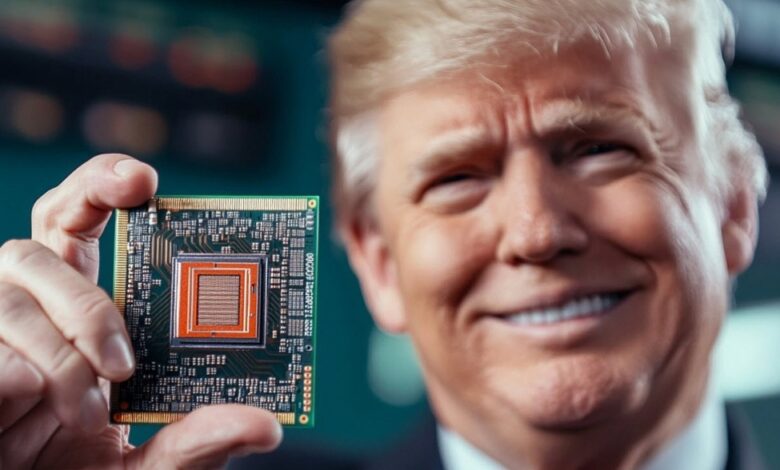
South Korea’s president warned that US chip tariffs would mainly drive up American prices, as Asia’s semiconductor dominance limits Washington’s leverage.
Summary:
-
Lee says US chip tariffs would raise US prices, not hurt Asian producers.
-
Proposed duties could reach 100% without new US manufacturing commitments.
-
Korea and Taiwan dominate global chip supply, limiting tariff effectiveness.
-
South Korea’s exports hit a record in 2025, led by semiconductors.
-
Lee briefly reiterated expectations for a stronger won later this year.
South Korean President Lee Jae-myung played down the threat posed by proposed US tariffs on semiconductor imports, arguing that any move by Washington to impose steep duties would ultimately raise prices for American consumers rather than undermine Asian chipmakers.
Lee was responding to comments from Howard Lutnick, who said South Korean and Taiwanese semiconductor firms could face tariffs of up to 100% unless they significantly expand manufacturing capacity in the United States. Lee said such a policy would be difficult to enforce without major economic consequences, given the dominant position held by Asian producers in the global chip supply chain.
He noted that South Korean and Taiwanese companies account for an estimated 80–90% of key segments of the semiconductor market, meaning the bulk of any tariff burden would likely be passed directly on to US prices. “Most of it is likely to be reflected in higher prices in the United States,” Lee said, adding that tariffs at that scale would function more as an inflationary tax than an effective industrial policy tool.
Lee also stressed that South Korea has safeguards embedded in its trade agreement with the US designed to prevent its chipmakers from being placed at a competitive disadvantage relative to peers in Taiwan or elsewhere. Those mechanisms, he said, would help shield Korean firms from discriminatory treatment even if US trade policy turns more aggressive.
The comments come against the backdrop of a strong export performance for South Korea. Total exports reached a record $709.4bn in 2025, up 3.8% from the previous year, driven largely by a surge in semiconductor demand linked to artificial intelligence investment. Semiconductor shipments jumped 22% last year, with total chip exports reaching $173.4bn.
While the US remains an important destination, chip exports to the American market accounted for just 8% of the total, with China the largest buyer, followed by Taiwan and Vietnam. The export mix highlights South Korea’s diversified demand base and limits the direct exposure of the sector to potential US tariff action.
At the end of his remarks, Lee also touched briefly on currency moves, reiterating official expectations that the won could strengthen toward the 1,400 per dollar level in the coming months, while acknowledging that FX dynamics remain closely tied to broader regional moves — a point discussed in more detail in earlier comments.