White House warns AI chip tariffs are just ‘phase one’ of broader semiconductor action

2026-01-15 23:36:00
Summary:
-
The White House says semiconductor tariffs announced this week were only “phase one”
-
The initial 25% levy targeted a narrow group of advanced AI chips
-
Further tariff announcements may follow pending talks with countries and companies
-
The move keeps pressure on global chipmakers and U.S. trading partners
-
Markets now face renewed uncertainty over broader semiconductor trade risks
The White House has signalled that newly announced U.S. tariffs on advanced semiconductors represent only the opening stage of a broader trade action, raising the prospect of wider levies across the global chip supply chain.
Earlier this week, the Trump administration imposed a 25% tariff on a narrow group of advanced artificial-intelligence chips, citing national security concerns under Section 232 of the Trade Expansion Act. The initial measures targeted select high-performance processors used in advanced computing and AI workloads, a move that immediately raised questions about how far Washington was prepared to go.
Those concerns were sharpened on Thursday after a White House official said the Commerce Department’s Section 232 semiconductor tariffs announced on Wednesday should be viewed as a “phase one” action. The official added that further announcements could follow, depending on the outcome of ongoing negotiations with foreign governments and individual companies.
The remarks suggest the administration is deliberately keeping pressure on U.S. trading partners and global chipmakers, using tariffs both as a national-security tool and as leverage in broader industrial policy discussions. Section 232 allows the U.S. government to impose trade restrictions on the grounds that imports threaten national security — a justification previously used for steel, aluminium, and autos.
While the first phase focused on a limited set of advanced AI chips, the warning of additional measures has revived fears of a wider escalation. Any expansion could potentially encompass a broader range of semiconductors, manufacturing equipment, or downstream technology products, significantly increasing costs across the electronics, automotive, and data-centre sectors.
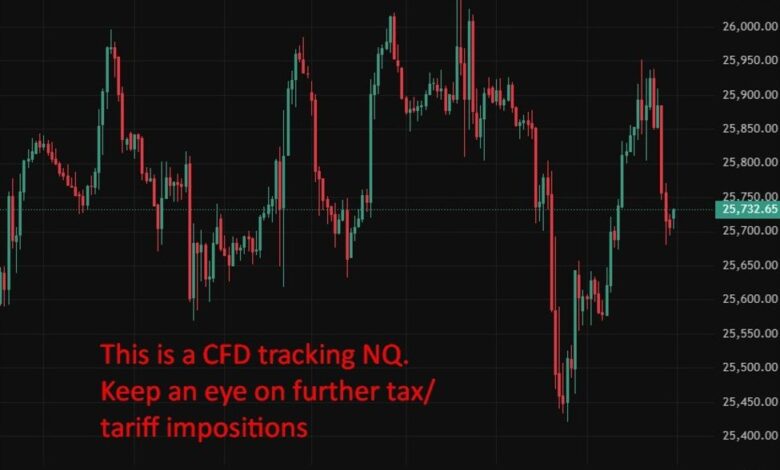
Markets have so far treated the latest comments as a conditional threat rather than an immediate escalation. However, the explicit reference to further “phases” has injected renewed uncertainty into global supply chains already strained by geopolitics, export controls, and reshoring efforts.
Industry participants and foreign governments are now likely to intensify lobbying efforts in Washington, seeking carve-outs or exemptions. At the same time, companies may accelerate efforts to localise production or diversify supply chains to reduce exposure to potential U.S. trade actions.
For now, the administration’s message is clear: the initial AI-chip tariffs are not the end of the story. With negotiations still underway, the risk of broader semiconductor levies remains live, keeping technology markets, trade partners, and investors on alert.