
Goldman sees lower but attractive 2026 equity returns: AI shift to adoption, credit capped

2026-01-09 00:11:00
At a glance:
-
Goldman stays modestly pro-risk for 2026, but expects lower returns than recent years
-
Tailwinds shift: less monetary impulse, more fiscal/regulatory support
-
AI seen moving from capex to adoption/monetisation phase
Valuations/risk premia look late-cycle, so earnings matter most
-
Prefers equities over credit; OW Asia ex-Japan, UW Europe
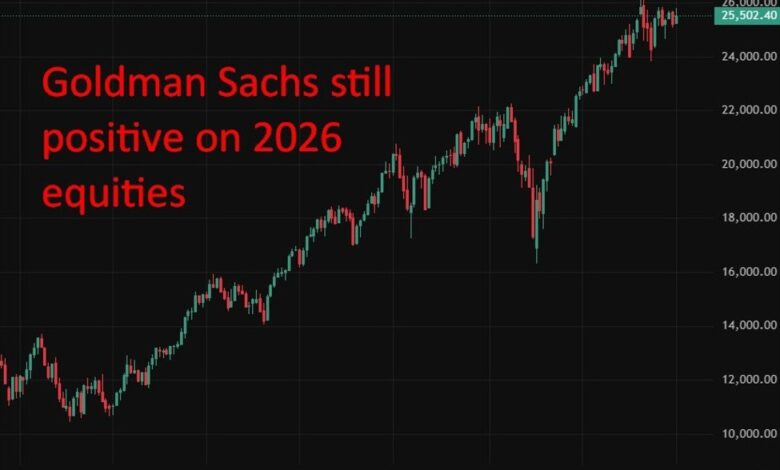
Goldman Sachs says global equities should still deliver “lower but attractive returns” in 2026, underpinned by a baseline of resilient growth, easing inflation and ongoing policy support, but with a clear warning that some of the biggest tailwinds from recent years are fading.
In its latest GOAL (Global Opportunity Asset Locator) note, Goldman strategist Christian Mueller-Glissmann says the bank remains modestly pro-risk into 2026, arguing that the mix of improving macro momentum and supportive policy settings is typically constructive for stocks. Goldman’s core message is that while the cycle is maturing, the usual late-cycle mistake is being too defensively positioned for too long, the note warns that being underinvested late cycle “can be costly.”
That said, Goldman flags a regime shift in what drives returns. It argues monetary policy tailwinds are diminishing, meaning the next leg of support is more likely to come from fiscal/regulatory easing rather than ever-looser financial conditions. It also expects AI tailwinds to evolve, shifting from a capex-heavy buildout phase toward broader adoption and monetisation, which could help widen market leadership beyond the biggest tech names.
Valuations are the other constraint. Goldman describes elevated valuations and compressed risk premia as “typical late cycle,” implying less room for easy multiple expansion and a bigger role for earnings delivery. It still sees potential for some valuation expansion if optimism holds, but expects earnings growth to do most of the heavy lifting, helped by strong corporate balance sheets that can support buybacks and capital markets activity.
On relative preference, Goldman leans equities over credit, arguing credit spreads are already tight and may cap returns, while equities can still compound via earnings. Regionally, it’s overweight Asia ex-Japan, neutral the US and Japan, and underweight Europe.