

2026-01-07 02:39:00
Australia’s headline CPI fell from 3.8% to 3.4% year-on-year in November, prompting traders to briefly consider the idea of further RBA easing.
November data from the Australian Bureau of Statistics reflected broad-based deceleration in price pressures, with both goods and services inflation moderating.
Key Takeaways
- Headline CPI rose 3.4% year-over-year in November, down from 3.8% in October and marking the lowest reading since mid-2024
- Trimmed mean inflation (core measure) eased to 3.2% annually from 3.3%, the lowest since December 2021
- Monthly CPI was flat (0.0%) in original terms but rose 0.2% on a seasonally adjusted basis
- Housing costs remained the largest contributor to inflation at 5.2% annually, driven primarily by electricity and rents
- Electricity prices surged 19.7% annually as Queensland state rebates were exhausted, though the pace moderated from October’s 37.1% increase
- Services inflation eased to 3.6% from 3.9%, while goods inflation slowed to 3.3% from 3.8%
Housing continued to exert the strongest upward pressure on inflation, contributing 1.12 percentage points to the overall 3.4% annual increase. Within the housing category, electricity costs rose sharply at 19.7% year-over-year, though this reflected the depletion of Queensland’s state government electricity rebate rather than underlying price increases.
Food and non-alcoholic beverages saw prices rise 3.3% annually, with particularly strong increases in meat and seafood (3.9%), driven by beef and veal (11.4%) and lamb and goat (12.3%) due to robust overseas demand.
Link to official ABS Consumer Price Index (November 2025)
Transport costs rose 2.7% annually, with automotive fuel prices up 3.5% for the year. In monthly terms, fuel prices jumped 2.5% in November, the strongest monthly gain since June, as average unleaded prices increased 4.8 cents per liter.
The deceleration in both headline and core inflation, combined with softer labor market conditions, strengthens the case for further monetary accommodation. However, persistent price pressures in housing, food, and services suggest the central bank will likely maintain a cautious, data-dependent approach rather than signaling a predetermined easing path.
The RBA policy trajectory could still hinge on services inflation, which at 3.6% annually remains elevated and represents more domestically-generated price pressure that the central bank can directly influence through monetary policy.
Market Reactions
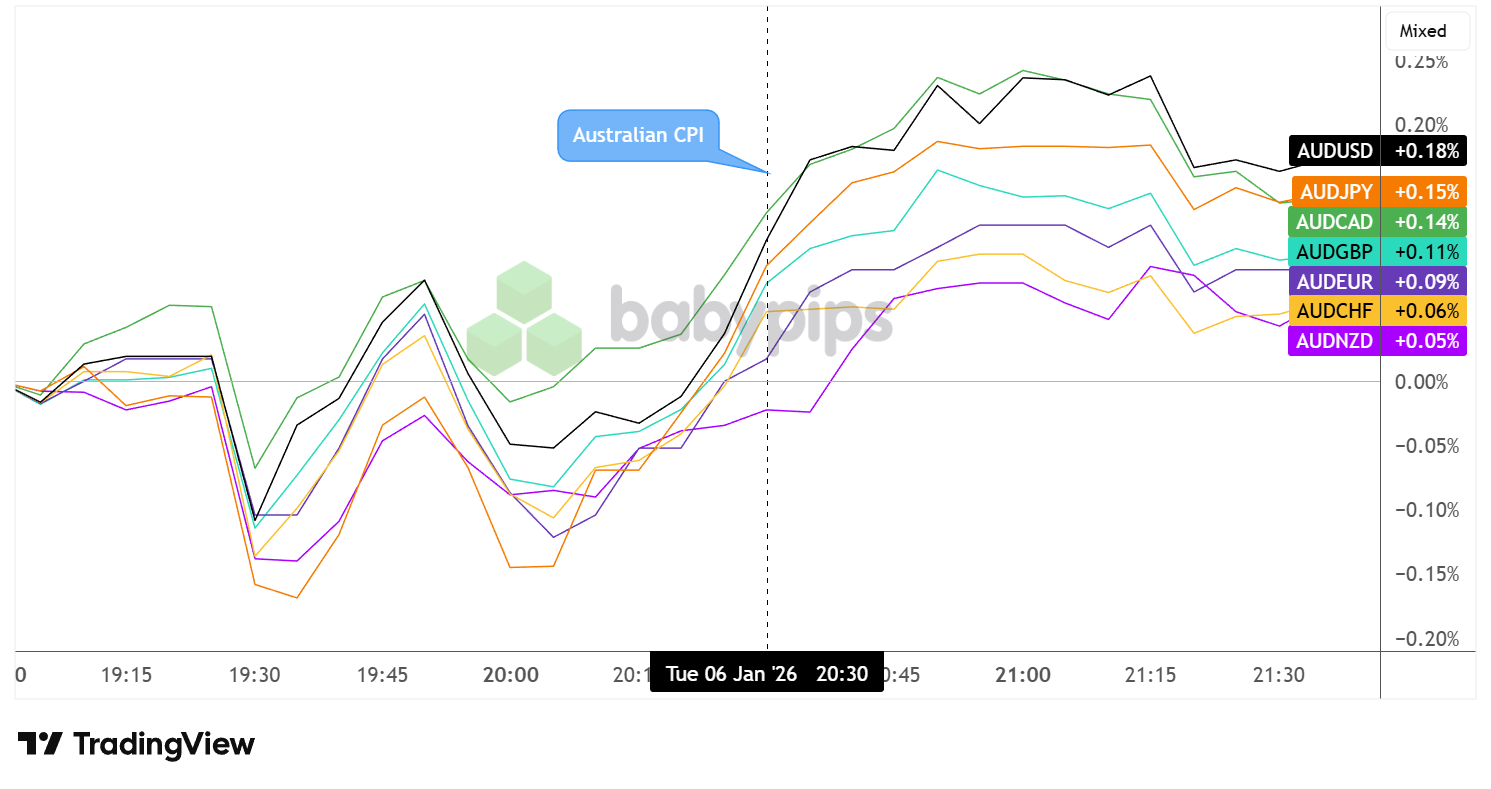
Australian Dollar vs. Major Currencies: 5-min
Overlay of AUD vs. Major Currencies Chart by TradingView
The Australian dollar, which had been tossing and turning on resurfacing China-Japan tensions leading up to the CPI release, had a generally bullish reaction to the results.
A bit of support may have also stemmed from stronger-than-expected building approvals data released at the same time, as well as elevated services inflation that remained well above the RBA’s comfort zone.
With that, AUD managed to pull higher across the board roughly an hour after the CPI numbers were printed, bagging decent pips against USD (+0.18%), JPY (0.15%) and CAD (+0.14%) while holding on to marginal gains versus NZD (+0.05%) and CHF (+0.06%).