

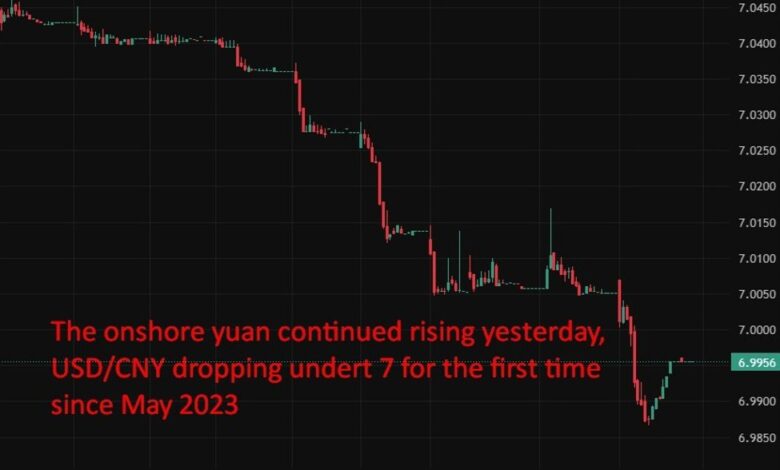
2025-12-31 01:15:00
The People’s Bank of China (PBOC), China’s central bank, is responsible for setting the daily midpoint of the yuan (also known as renminbi or RMB). The PBOC follows a managed floating exchange rate system that allows the value of the yuan to fluctuate within a certain range, called a “band,” around a central reference rate, or “midpoint.” It’s currently at +/- 2%.
The previous close was 6.9940
—
Earlier:
The daily fixing of this mid-rate is often interpreted as a policy signal rather than just a technical reference point. A higher-than-expected USD/CNY midpoint is typically read as a sign the PBOC is leaning against CNY appreciation pressure, like today. In recent months, the People’s Bank of China has taken deliberate steps to moderate the speed of appreciation in the onshore yuan, signalling a preference for stability over sharp currency gains. Rather than targeting a specific level, policymakers appear focused on preventing an overly rapid rise in CNY that could disrupt trade, capital flows and domestic financial conditions. Yesterday USD/CNY fell below 7.0 for the first time since May 2023. The PBoC is slowing the appreciation of the yuan, but hasn’t stopped it.
more to come
—
Piecemeal stimulus steps continue from China:
- China eases property taxes but avoids bold housing stimulus (property downturn drags on)
- China is extending a value-added tax (VAT) exemption on certain residential property sales, adding another incremental policy measure aimed at stabilising its long-running real estate downturn. While the move lowers transaction costs for homeowners, it underscores Beijing’s preference for targeted relief rather than more forceful intervention.
- China boosts consumer trade-in subsidies, expands scheme to digital products in 2026
- China is stepping up efforts to revive household spending, allocating fresh funding from ultra-long special treasury bonds to expand its consumer trade-in subsidy scheme. The programme, first launched in 2024, will be broadened in 2026 to include digital and smart products, as policymakers look to counter weak growth momentum and rebalance the economy toward consumption.
—
Still to come (very soon!)