

2025-12-23 01:16:00
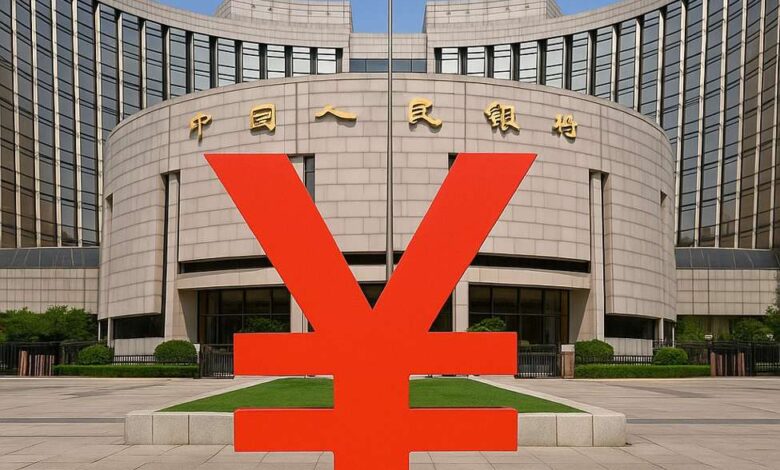
The People’s Bank of China (PBOC), China’s central bank, is responsible for setting the daily midpoint of the yuan (also known as renminbi or RMB). The PBOC follows a managed floating exchange rate system that allows the value of the yuan to fluctuate within a certain range, called a “band,” around a central reference rate, or “midpoint.” It’s currently at +/- 2%.
Earlier:
The daily fixing of this mid-rate is often interpreted as a policy signal rather than just a technical reference point. A higher-than-expected USD/CNY midpoint is typically read as a sign the PBOC is leaning against CNY appreciation pressure, like today.
—
In recent months, the People’s Bank of China has taken deliberate steps to moderate the speed of appreciation in the onshore yuan, signalling a preference for stability over sharp currency gains. Rather than targeting a specific level, policymakers appear focused on preventing an overly rapid rise in CNY that could disrupt trade, capital flows and domestic financial conditions.
China operates a managed floating exchange-rate system, under which the PBOC sets a daily midpoint (or fixing) around which the onshore yuan can trade within a prescribed band. A key tool has been the consistent setting of weaker-than-market-expected fixings, even during periods when spot-market forces point to faster yuan appreciation. By leaning against market momentum at the fixing stage, authorities have effectively smoothed the currency’s ascent.
The central bank has also relied on state-owned banks to manage intraday price action. These banks are widely seen selling yuan or buying dollars at key moments, particularly during periods of thin liquidity, helping cap upside moves without the need for explicit, large-scale intervention. This approach keeps volatility low while reinforcing the official signal that appreciation should be orderly.
Slowing yuan gains also serves several macro objectives. A rapidly appreciating currency would squeeze exporters at a time when China is still navigating uneven domestic demand and structural adjustment. It could also encourage speculative inflows and carry trades, complicating monetary management given China’s relatively low interest rates. By managing the pace of appreciation, the PBOC reduces the risk of one-way bets building in the currency.
Importantly, these actions do not suggest Beijing is resisting a stronger yuan outright. Instead, the strategy reflects a desire to align currency moves with economic fundamentals while avoiding destabilising swings. For markets, the message is clear: the PBOC is comfortable with a firmer yuan, but only on its own terms and at a controlled speed.