ICYMI – Japan says it has “free hand” on FX action, intervention talk that lifted the yen

2025-12-22 22:20:00
Summary:
-
Japan’s finance minister said authorities have a “free hand” to act against speculative yen moves.
-
Remarks followed yen weakness after the BOJ’s rate hike and lifted the currency in Europe and US trade.
-
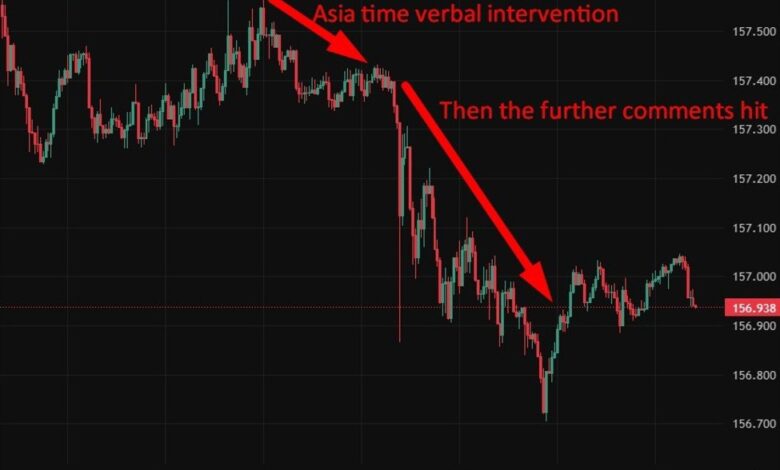
Comments built on earlier Asia-session support after verbal intervention from Atsushi Mimura.
-
Reference to the Japan–US FX accord suggests Tokyo believes it has scope to intervene if volatility worsens.
-
Fiscal expansion plans add complexity, with rising yields highlighting market sensitivity to public finances.
Japan’s finance minister Satsuki Katayama delivered her strongest warning yet against currency speculation, saying Tokyo has a “free hand” to take bold action against yen moves that are not aligned with economic fundamentals.
In remarks to Bloomberg on Monday, Katayama said the yen’s sharp weakening late last week, even after the Bank of Japan raised interest rates to their highest level in 30 years, was “clearly not in line with fundamentals but rather speculative.” She said authorities were prepared to respond forcefully, citing language in the Japan–US finance ministers’ joint statement that preserves the option of intervention during periods of excessive volatility.
The comments helped underpin yen strength during European and US trading hours on Monday, extending gains that had already begun earlier in the Asia session following verbal intervention from Japan’s top currency diplomat Atsushi Mimura. Mimura had warned against “one-sided” and “sharp” FX moves, prompting initial short-covering in USD/JPY.
Katayama’s reference to the bilateral agreement with Washington suggests Tokyo believes it has tacit approval to act without further negotiation. The accord, signed in September by her predecessor Katsunobu Kato and US Treasury Secretary Scott Bessent, reaffirmed that while markets should determine exchange rates, intervention remains appropriate in cases of disorderly moves.
Japan spent roughly US$100bn defending the yen last year, with action clustered around the ¥160 level. The currency was trading closer to ¥157.40 on Monday evening. Katayama declined to define specific trigger levels, stressing that each episode of volatility is judged on its own merits.
Beyond FX, Katayama acknowledged near-term pressure on Japan’s public finances as Prime Minister Sanae Takaichi’s government pursues aggressive fiscal stimulus. However, she argued any deterioration would be temporary, with stronger growth, investment and tax revenue expected to follow. Concerns around fiscal expansion helped push Japan’s 10-year government bond yield to a 27-year high of 2.1% on Monday.