
2025-12-19 16:04:00
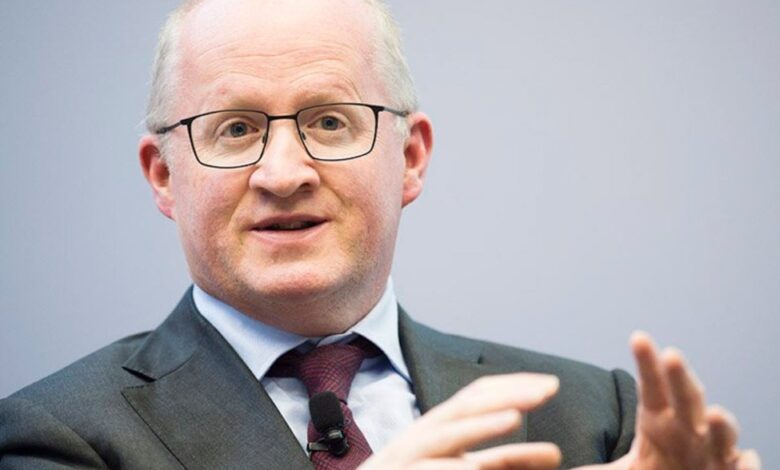
After months of easing, the Governing Council decided that 2.00% is the magic number—the “neutral” rate where they can sit back and let the economy hum. But if you listened to Philip Lane today, the humming sounds more like a sputter.
Lane’s presentation at the CBI workshop was a masterclass in saying “we are done cutting” while simultaneously showing us a dozen charts explaining why the economy is barely keeping its head above water.
Lane is pinning the hold on sticky domestic costs. The data shows services inflation is proving to be a problem, refusing to break below 3% in the near term. With compensation per employee projected to jump 4.5% in 2025, Lane is signaling that they can’t cut further right now without risking a wage-price spiral. He sees the “last mile” of disinflation as a long, slow grind.
While Lane defends the hold with inflation charts, his growth slides are flashing red. The staff projections have 2025 GDP growth at a dismal 1.4% and 1.2% next year and 1.4% in 2027. That is stagnation with a bow on it.
Looking further out, this chart caught my attention as it shows worsening consumption despite a decline in the savings rate.
Lane devoted entire slides to the “volatile global trade environment” and the decoupling of US and Euro area export volumes. He is effectively telling us that the external engine of the European economy is broken while at the same time forecasting impressive increases in exports in 2027 and 2028.
Lane is trying to sell a “soft landing” narrative where 2% rates are perfect. But looking at his own charts—weak investment , fragmented trade, and flatlining growth—2% doesn’t feel neutral. It feels tight. The ECB might be done for now, but if that growth forecast slips even a fraction, “neutral” could be a problem.
The thing is, it might only be half the problem as the two slides look overly optimistic on inflation. First off, he straight-lines a decline in services inflation but also assumes energy disinflation next year and minimal inflation out to 2028. I find that hard to believe given AI power spending and brent at $60. That’s an unsustainably low level.
Overall, the euro had a good year and European stock markets were particularly strong but the problems in the eurozone economy under the surface are worsening, not getting better.
For now there isn’t really a trade here but the picture for the eurozone in 2026 is fragile. I would expect a short-term peace dividend if there is a ceasefire in Ukraine but that won’t last long.