
2025-12-17 01:15:00
The People’s Bank of China (PBOC), China’s central bank, is responsible for setting the daily midpoint of the yuan (also known as renminbi or RMB). The PBOC follows a managed floating exchange rate system that allows the value of the yuan to fluctuate within a certain range, called a “band,” around a central reference rate, or “midpoint.” It’s currently at +/- 2%.
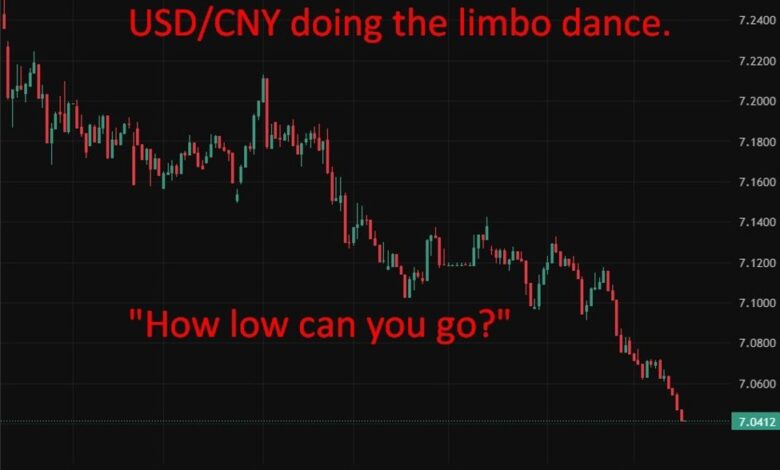
Yesterday’s close was 7.0573.
Today’s mid rate at 7.0573 is the strongest for the onshore yuan since October 9 2024.
more to come
—
Earlier from China today we had China’s commerce ministry saying a newly adopted United Nations treaty on globally traded goods highlights Beijing’s commitment to multilateralism and its role in supplying public goods to the international trading system.
The comments followed the United Nations General Assembly’s adoption on Tuesday of the Convention on Negotiable Cargo Documents, a framework designed to modernise trade logistics by allowing changes to shipping and ownership documentation while goods are already in transit by road, rail, air or sea. Chinese officials said the treaty would improve efficiency, reduce transaction costs and better align global trade practices with the realities of modern supply chains.
The ministry described the agreement as evidence of China’s determination to uphold what it called “true multilateralism,” arguing that international cooperation, rather than unilateral measures, remains essential for sustaining global commerce. It said the convention would particularly benefit developing economies by lowering logistical barriers and supporting more resilient trade flows.
China has been a strong advocate for updating international trade rules to reflect digitalisation and complex cross-border supply chains, positioning itself as a supporter of multilateral institutions at a time when trade policy has become increasingly fragmented. The commerce ministry said Beijing would continue to engage constructively in UN-led initiatives and contribute to the provision of global public goods.
The convention is expected to enter into force once ratified by a sufficient number of countries, with supporters arguing it will enhance legal certainty and flexibility in international goods trade.