

2025-12-16 03:28:00
- US suspends UK tech deal amid wider trade tensions (earlier Financial Times report)
- Indian rupee fresh record lows on flow pressure
- CBA sees February RBA rate hike as growth runs hot. Citi & NAB also expect February hike.
- NAB sees RBA hiking twice in 2026, clashing with market expectations for extended hold
- China eyes pragmatic 2026 growth target near 5% (while onshore yuan surges higher!)
- ICYMI – Ford takes US$19.5bn EV charge as strategy pivots to hybrids
- New Zealand fiscal outlook darkens as finance minister Willis sticks to discipline
- PBOC sets USD/ CNY reference rate for today at 7.0602 (vs. estimate at 7.0444)
- Japan preliminary December PMI shows modest growth as services offset factory weakness
- New Zealand bonds – NZDMO cuts near-term bond issuance but lifts medium-term outlook
- Australian consumer sentiment falls sharply in December: Westpac
- ECB/NFP preview – Morgan Stanley sees euro gain if ECB avoids rate pushback, 1.30 longterm
- Nasdaq moves toward 24/5 stock trading amid global demand
- Goldman Sachs raises its 2026 copper forecast as tariff odds ease
- Australia preliminary December PMI: Manufacturing 52.2 (prior 51.6) services 51.0 (52.8)
- New Zealand data: November Food Price Index -0.4% m/m (prior -0.3%)
- Tech stocks slide as Broadcom tumbles amid market turbulence
We saw a raft of lower-tier economic data released during the Asia session.
New Zealand kicked things off with data showing food price inflation falling on the month while remaining elevated year on year. The monthly decline in the Food Price Index will be welcomed by the Reserve Bank of New Zealand, offering tentative evidence that one of the stickier components of inflation may be starting to ease. With food prices accounting for nearly a fifth of the CPI basket, even modest monthly declines can have a meaningful impact on headline inflation outcomes.
Later from New Zealand, fresh fiscal projections showed no return to a budget surplus over the next five years, as weak growth and higher debt continue to delay fiscal repair. Net debt is now seen peaking at 46.9% of GDP, despite tentative signs of economic recovery. Separately, the New Zealand Debt Management Office trimmed its near-term bond issuance plans. The NZD was heavy for most of the session.
The AUD also softened before recovering modestly. Australian data showed the headline S&P Global Flash Composite PMI eased to 51.1 in December from 52.6 in November — a seven-month low, but still comfortably above the 50 expansion threshold, extending the growth run to fifteen consecutive months.
The moderation reflected slower momentum across both sectors. Services activity eased, with the Business Activity Index falling to 51.0 from 52.8 as heightened competition and softer export growth weighed. Manufacturing, by contrast, showed relative resilience, with the PMI rising to 52.2 from 51.6 on firmer goods demand and improved export orders.
We also heard from Commonwealth Bank of Australia and National Australia Bank, with analysts at both now expecting a Reserve Bank of Australia cash rate hike at the 2–3 February 2026 meeting. NAB further expects an additional hike in May ’26. AUD/USD dipped to just below 0.6620 before rebounding modestly toward 0.6635, with NZD/USD also ticking higher.
USD/JPY drifted lower, briefly testing below 154.75. Japan’s preliminary December PMI showed modest growth as services offset ongoing manufacturing weakness, with little else of note from the data.
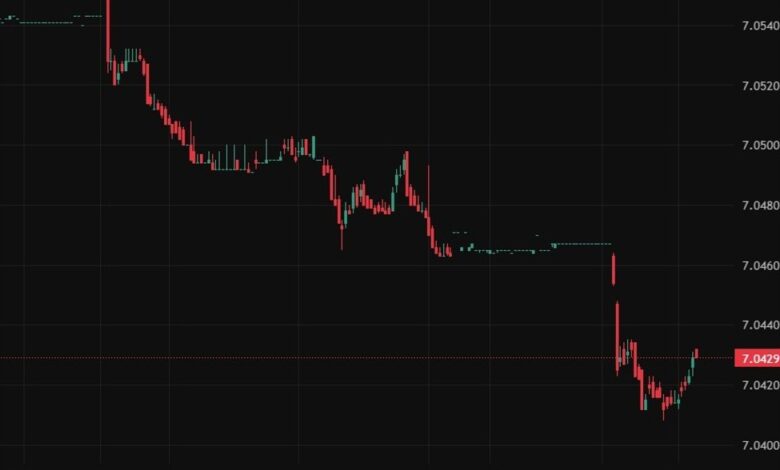
In China, the PBOC once again set USD/CNY above model estimates at the daily fixing, though the market pushed the pair lower regardless, with USD/CNY hitting levels last seen in late September 2024. Meanwhile, China Securities Times reported policymakers are debating whether to set next year’s growth target at around 5% or adopt a more flexible 4.5%–5.0% range, underscoring a pragmatic approach amid a tougher external backdrop.
Asia-Pac
stocks were heavy, following a weak Wall Street:
- Japan
(Nikkei 225) -1.28% - Hong
Kong (Hang Seng) -1.88% - Shanghai
Composite -1.29% - Australia
(S&P/ASX 200) -0.41%
This article was written by Eamonn Sheridan at investinglive.com.